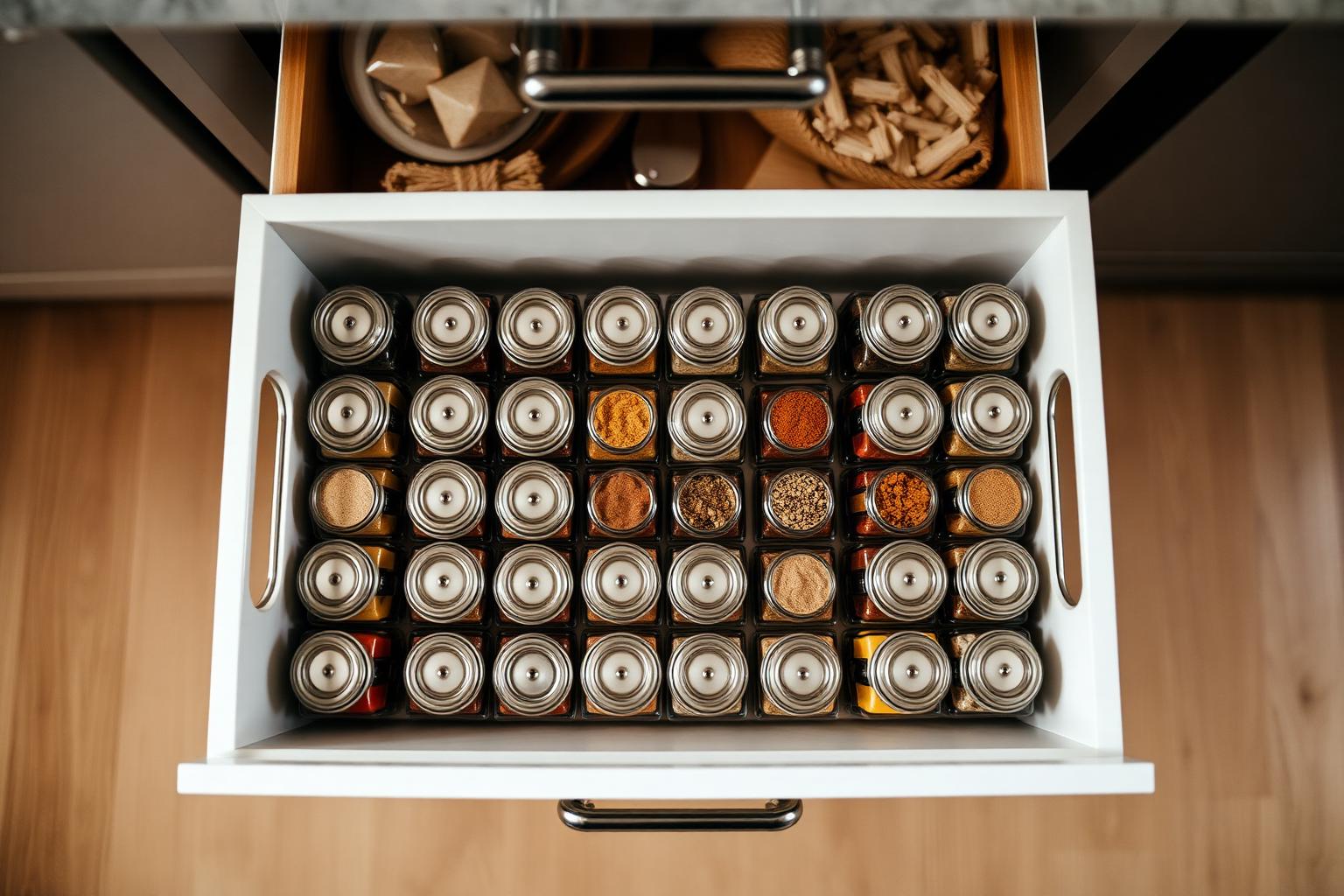
Pinterest pantries are a beautiful lie. The matching jars, the calligraphy labels, the spice tiers arranged in rainbow order. They look incredible on day one and then collapse the moment a family with two kids, a dog, and a grocery delivery actually lives in the house. I know because I built one of those pantries in my first apartment and watched it fall apart in six weeks.
The system below is the opposite of aspirational. It is the boring, durable version that has survived three moves, two toddlers, and roughly four hundred grocery runs. Let's walk through it.
Start By Emptying Everything
I know this sounds extreme, but every successful pantry reorganization starts with a full unload. Take everything out. Wipe down the shelves. Throw out anything past its prime, including those condiments you bought for one specific recipe in 2023.
While the shelves are empty, take a quick photo. You'll want it later when you start building the zones.
Build Three Zones, Not Twelve Categories
The mistake most pantry guides make is recommending too many categories: breakfast, baking, snacks, canned goods, grains, oils, spices, sauces, condiments, kids' food, and so on. Twelve zones means twelve decisions every time you put a grocery item away, and that's why systems fail.
Instead, use three zones based on how often you reach for something.
Zone 1: Daily
Eye-level shelves and the most accessible bin. This is where coffee, cereal, oats, peanut butter, snacks, and anything used multiple times a week lives. If you reach for it every day, it goes here.
Zone 2: Weekly
Slightly above or below eye level. Pasta, rice, canned goods, baking staples, and ingredients you use for regular meals. Things you touch a few times a week but not daily.
Zone 3: Occasional
Top shelves, deep corners, or lower cabinets. Holiday baking ingredients, specialty oils, backup supplies, party serving ware. If you reach for it less than once a month, it lives here.
Containers: Less Is More
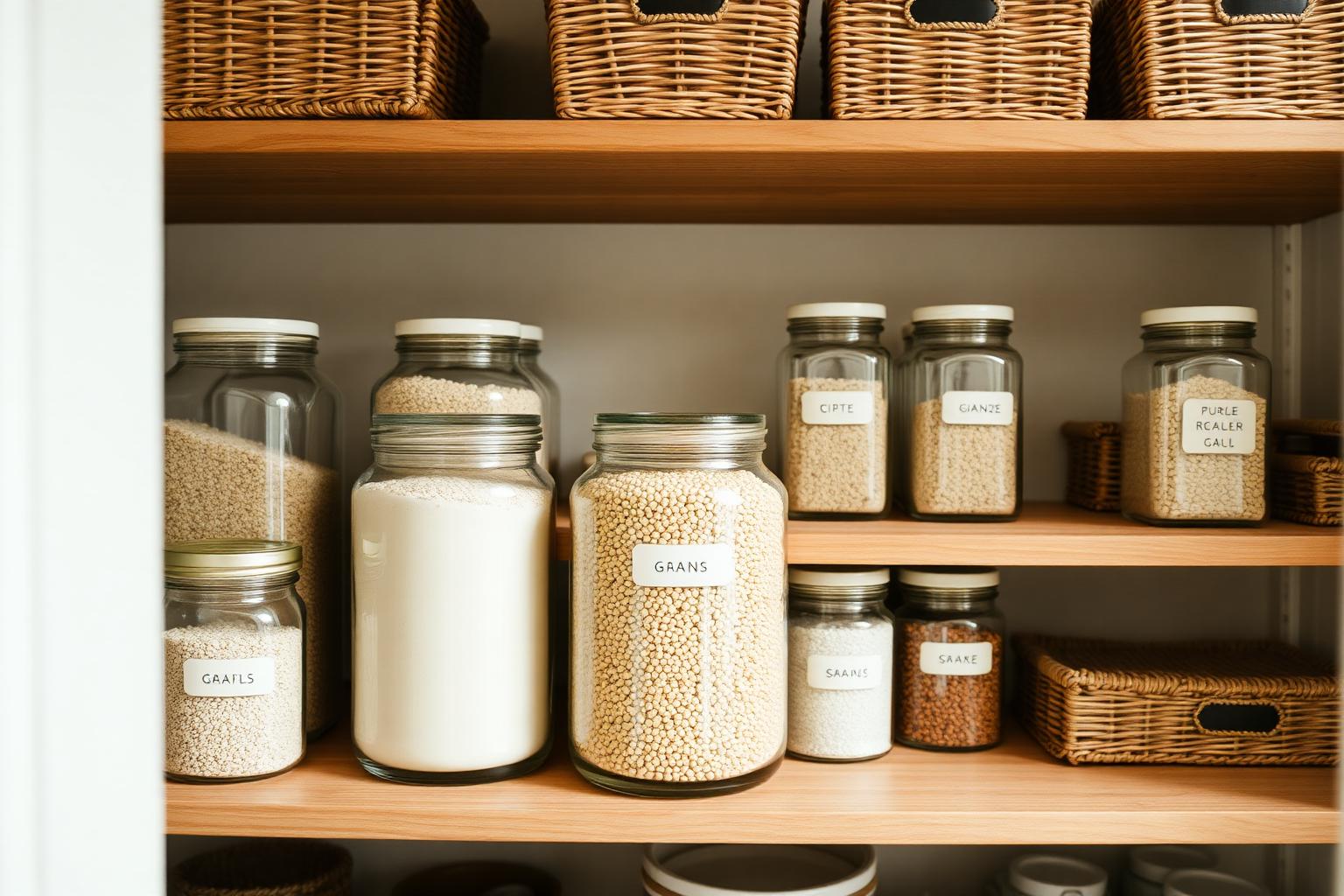
You do not need a matching set of forty glass jars. You need containers for the five things that genuinely benefit from decanting: flour, sugar, rice, pasta, and one or two cereals or snacks that come in bulky packaging.
Everything else can stay in its original packaging. Cans, jars, boxes of crackers, bags of chips — these are fine as is. Trying to decant everything is what makes pantries fall apart.
The Basket Rule
For anything small and miscellaneous (snack bars, tea bags, packets of taco seasoning), use a single labeled basket per category. Tossing things into a labeled basket takes one second. Trying to line them up neatly takes one minute. Guess which one survives a busy week?
- Snack basket: bars, fruit pouches, single-serve crackers
- Sauce basket: small bottles of hot sauce, soy sauce, vinegars
- Baking basket: chocolate chips, sprinkles, decorating supplies
- Tea and coffee basket: bags, pods, sweeteners
Labels Done Right
Skip the gorgeous calligraphy labels. Use a label maker or a piece of masking tape. The goal is not beauty, it's that anyone in the household can put groceries away without asking you where things go. If your partner or kids cannot read the label across the room, the label has failed.
The Monthly Five-Minute Reset
Once a month, spend five minutes resetting the pantry. Pull anything out of place, wipe one shelf, toss anything expired. That's it. This tiny ritual is the single biggest reason my system survives, and it's the step that almost every pantry blog forgets to mention.
The best organizing system is the one your tired, hungry, distracted self will actually follow at 9pm on a Tuesday.
Final Thoughts
A pantry doesn't need to be beautiful to be functional, and a functional pantry will save you real time every single week. Build the three zones, decant only what truly needs it, label clearly, and run the monthly reset. That's the whole system.
Filed in Organizing · Pantry & Kitchen
More articles