Kitchen drawers are the secret test of any organizing system. The pantry can stay pretty for a while because you only open it a few times a day. The drawers get opened twenty or thirty times before lunch and another twenty before dinner. Every Pinterest-worthy drawer layout meets reality fast, and most of them do not survive a single week of normal cooking.
The framework below is not pretty. It is durable. It has lived through three apartments, two kitchen renovations, a toddler who liked to pull spatulas onto the floor, and an entire pandemic of sourdough experiments. If your kitchen drawers keep sliding back into chaos a few days after you organize them, the problem is almost certainly the categories, not your willpower.
Start by Emptying Everything
Take everything out of every drawer. Lay it on the counter or on the table. This step is the one most guides skip, and it is the most important one. You cannot organize what you cannot see, and you cannot judge what you actually need until you face the whole pile at once.
Wipe out the empty drawers while you are at it. Surprising things accumulate in drawer corners — crumbs, dried spice, a single rubber band, the cap to a pen you have been looking for since 2022.
The Four-Category Rule
Every kitchen needs exactly four drawer categories. Not seven. Not twelve. Four. Each one earns its drawer because the items inside genuinely belong together based on how often they are reached for in real cooking.
Drawer One: Daily Utensils
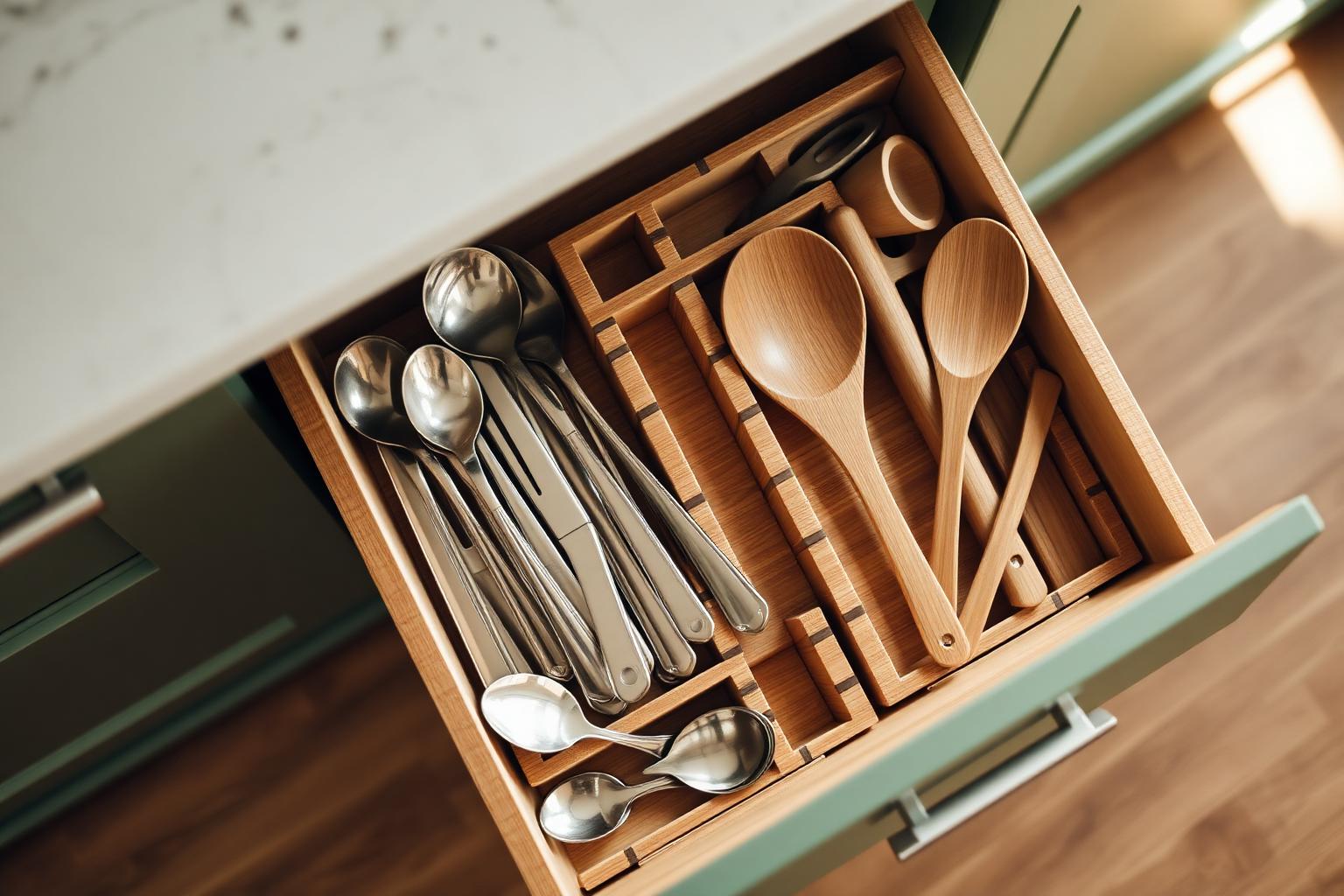
The drawer closest to the stove. Wooden spoons, spatulas, tongs, whisks, a ladle, a slotted spoon. Anything you reach for at least once a day. Limit it strictly — two spatulas, not five. One whisk, not three. If you reach for a tool less than once a week, it belongs in another drawer.
Drawer Two: Knives and Cutting
Knives, kitchen shears, a knife sharpener, the pull-out cutting board if you have one. Use a knife block insert or a magnetic strip on the drawer's interior side to keep knives from clattering against each other and dulling. This drawer is also where the vegetable peeler and the box grater live.
Drawer Three: Small Tools and Gadgets
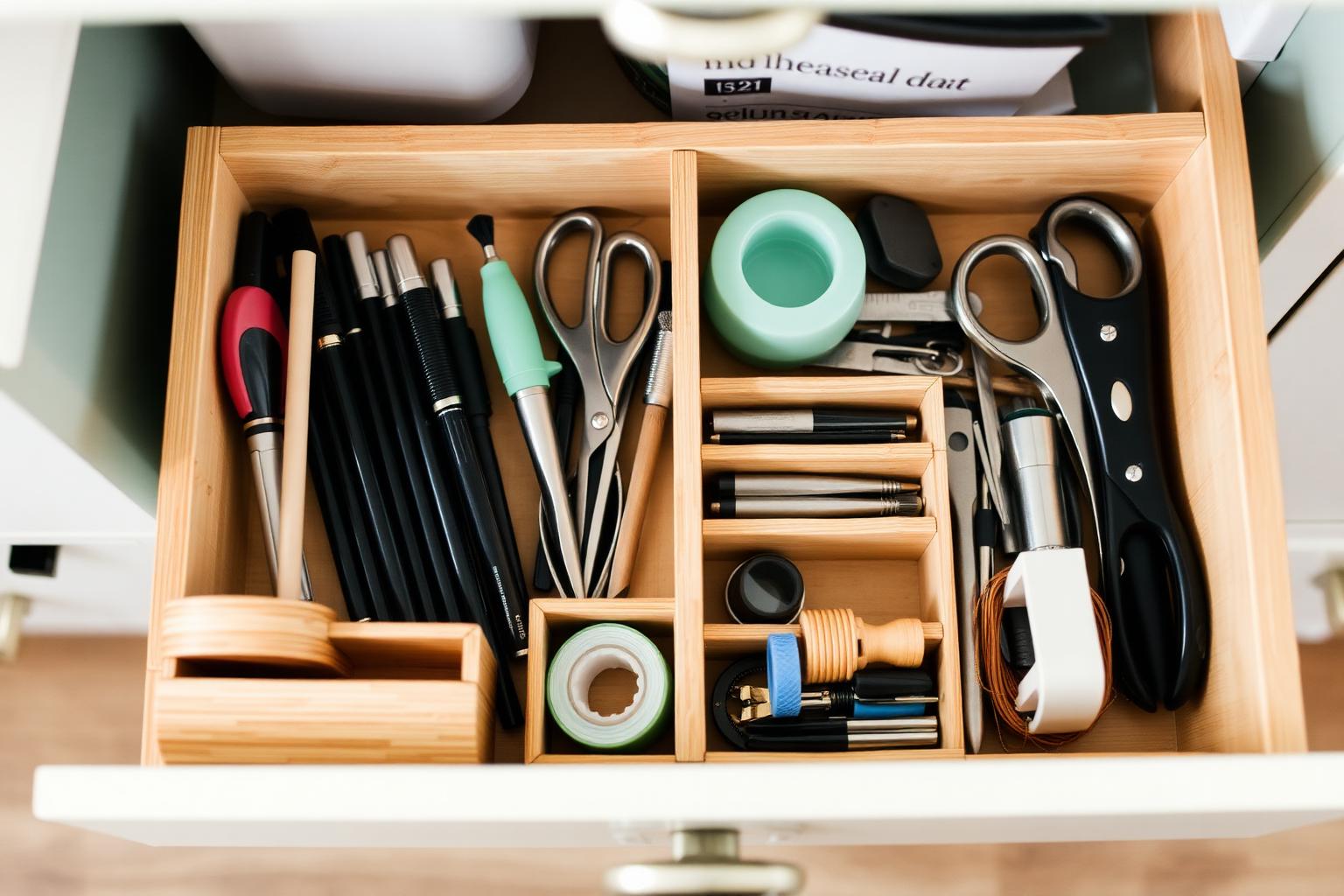
Can opener, bottle opener, measuring spoons, measuring cups, a microplane, the avocado tool nobody actually needs, a citrus juicer, kitchen scissors, a meat thermometer. Use small bins or drawer inserts to group like with like — measuring tools in one section, openers in another, miscellaneous in a third.
Drawer Four: Linens and Wraps
Dish towels, oven mitts, hot pads, aluminum foil, parchment paper, plastic wrap, freezer bags. Stack the linens vertically (folded in thirds and stood on their ends) so you can see every one at a glance instead of pulling the bottom one out of a precariously balanced pile.
Why Four Drawers, Not Twelve
The trap most people fall into is over-categorizing. They make a drawer for baking, a drawer for serving, a drawer for entertaining, a drawer for kids' lunch supplies. Each new category means more decisions per item every time you put a clean dish away. Over thousands of small decisions, the system collapses because nobody can sustain that many tiny choices in a row.
Four categories means four decisions, every time. That is sustainable. Your spouse can keep up. Your kids can keep up. Your tired Tuesday-night self can keep up. That is the entire reason the system holds.
Drawer Dividers, Honestly
The pretty bamboo expandable dividers from the home stores work well. So do the cheap plastic ones from the dollar store. So do shoeboxes cut to fit. The shape of the divider matters far less than whether you use it consistently. The point is to define zones inside the drawer so things cannot drift.
Two practical tips: pick dividers with non-slip bottoms (or stick small rubber pads to the underside) so they do not slide every time you open the drawer; and leave a quarter-inch of breathing room at the back of each section so things slide in easily without forcing.
The Vertical Trick
Anything that can be stored vertically should be. Cutting boards on their edges in a tall thin divider. Baking sheets on their edges instead of stacked. Dish towels folded into thirds and stood up like file folders. Vertical storage means you can see every item at a glance — no excavation required — which is the single biggest reason organized drawers stay organized.
What to Keep Out of Drawers Entirely
Some things that always end up in drawers actually belong somewhere else. The decision about where each lives is half the battle.
- Daily-use utensils in a crock on the counter
- A magnetic strip on the wall for the most-used knives
- Pot holders on a hook near the stove
- A small rolling cart for less-frequent appliances
- A hanging rack above the island for pots and pans
Getting four or five items out of the drawers frees up serious real estate and reduces the number of things competing for limited space.
The Friday Reset
Once a week, on whatever day you do your grocery run, spend three minutes resetting the kitchen drawers. Pull out anything that has migrated, put it back where it belongs, wipe any crumbs from the dividers. That is the whole reset. It takes three minutes, and it is the single thing that keeps the system alive over months and years.
Pair it with grocery unloading: groceries go away, drawers get reset, kitchen ends in baseline state. You do this anyway every week; you are just adding a tiny additional pass.
The kitchen drawers that look the same in October as they did in March are not the ones with the best dividers. They are the ones with the simplest categories.
A Note on Drawers Under the Stove
Many stoves have a deep storage drawer underneath. Treat it as a fifth category but limit its contents tightly: large baking sheets, cooling racks, the broiler pan. Do not let it become a junk drawer for things you do not know where to put. If something has no other home, the answer is usually to donate it, not to slide it under the stove.
When You Inherit a Disaster
If your drawers have been in chaos for years, start with one drawer per evening rather than trying to do all four in a single Saturday. The single-drawer-per-evening approach feels manageable and gives you time between sessions to notice what is still missing or what is over-allocated. By the end of the week, every drawer is reset and you have not had to block off a full weekend.
Teach the System to the Rest of the House
If you share the kitchen with other adults or older kids, walk them through the four categories once. Tape a small index card with the four-category list inside one of the cabinet doors. People are far more likely to put things in the right place when they actually know where the right place is. Without that two-minute conversation, you will end up doing all the resetting alone forever, and the system will quietly fall apart.
Final Thoughts
Pretty drawers are easy for a week. Functional drawers that survive years of cooking are built from a small number of categories, clearly defined zones, and one quick weekly reset. Try the four-category system for a month and pay attention to whether you start cooking faster — almost everyone does, because the small daily friction of hunting for a whisk disappears entirely. That feeling is the whole point.
Filed in Organizing · Pantry & Kitchen
More articles