Small apartments are often portrayed as a compromise — the version of a home you live in until you can afford something bigger. That framing misses the point. A well-designed small apartment can feel calmer, brighter, and more intentional than a large home stuffed with the wrong furniture. The trick is making every cubic foot do meaningful work without making the space feel busy.
The twelve ideas below come from years of living in apartments small enough that visiting friends sometimes asked, gently, where the rest of it was. None of them require renovation. Most cost less than 50 dollars. All of them are quietly worth doing.
1. The Under-Bed Drawer System
The space under the bed is the single largest underused storage area in most apartments. Six to twelve inches of horizontal space under a typical bed equals roughly the storage of a small closet. Use it.
Flat under-bed bins on wheels (some come in fabric, some in clear plastic) hold off-season clothes, extra bedding, shoes, or anything else you do not reach for daily. Buy a bed frame with at least 12 inches of clearance or, if your current bed is lower, use bed risers that lift it four to eight inches. Risers cost about 15 dollars and unlock real square footage.
2. The Bench at the Entry
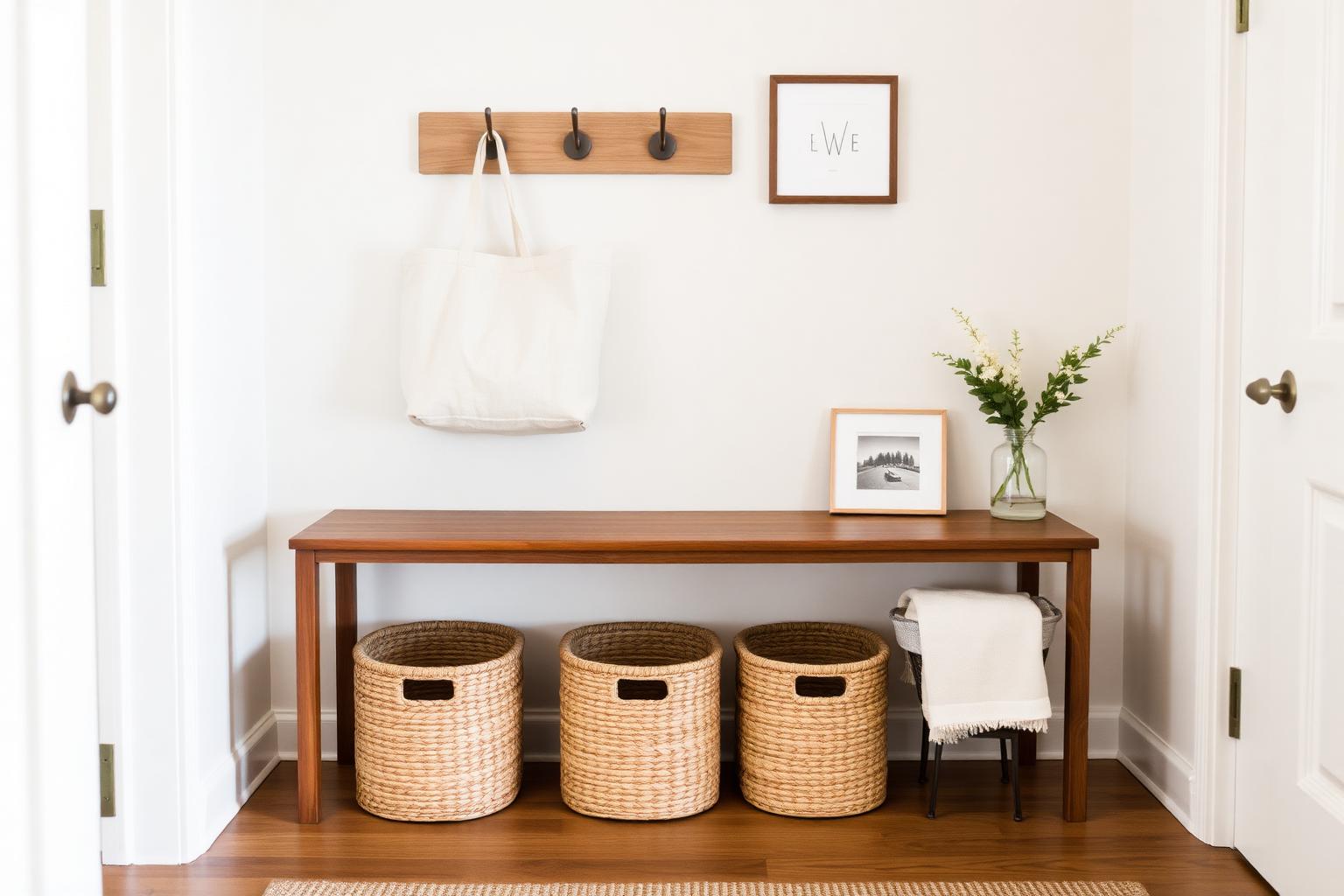
A small bench by the door doubles as a shoe storage spot and a place to sit while putting shoes on. Look for one with an open shelf or lift-top storage. The simple act of having a place to sit makes coming home feel different, and the storage absorbs the chaos that usually lives in entryways.
3. Vertical Bathroom Storage
Most bathrooms have one cabinet and a mirror. Add a tall narrow shelf above the toilet (over-the-toilet shelving units are designed exactly for this) and you triple the bathroom's storage with no floor space sacrificed. Use it for towels, toilet paper, and the back-up supplies that would otherwise live awkwardly in the closet.
4. The Door as Storage
Every door is a storage opportunity. The inside of the bathroom door for a hanging organizer. The inside of the pantry door for spices. The inside of the bedroom closet door for shoes or accessories. The back of the front door for keys, bags, and outerwear. Each one, individually, is small. Together, they add up to the equivalent of an entire small closet's worth of hidden storage.
5. Over-the-Sink Cutting Board
If your kitchen counter is genuinely tiny, a cutting board that fits over your sink essentially doubles your prep surface. Use it for chopping, kneading, or as a small landing pad while cooking. When you are done, store it vertically next to the fridge or behind the sink itself.
6. A Coffee Table With a Hollow
A coffee table with lift-top, a hidden drawer, or open shelving underneath can absorb blankets, remotes, magazines, and the small everyday detritus of living-room life. The trick is to pick one that looks intentional with the storage closed, so the room stays calm when it is not in use.
7. The Two-Tier Closet Rod
See the closet organization guide for the full explanation. In a tiny apartment, the second tier is essentially mandatory. It is the difference between fitting your wardrobe in one closet and needing two, and it requires no installation.
8. Wall-Mounted Folding Desk
If you need to work from home but lack the space for a permanent desk, a wall-mounted desk that folds flat when not in use is a small marvel. Cost: 60 to 150 dollars. Footprint when closed: three inches. Footprint when open: a real workspace. This is one of those purchases that quietly changes how the apartment functions.
9. The Tall Bookcase
A tall narrow bookcase — five or six feet high, 12 inches deep — uses vertical space that small apartments otherwise waste. Stack books, baskets of small items, decorative objects, even shoes on the lower shelves. The visual height also draws the eye up, which makes the room feel taller than it is.
10. Magnetic Knife Strip
Counter space in a small kitchen is precious. A magnetic knife strip on the wall stores knives where they are visible and reachable without taking up an inch of counter. Bonus: knives stay sharper longer because they are not banging against each other in a drawer.
11. Behind-the-Door Pantry
If you do not have a real pantry, a tall narrow shelf or pegboard mounted behind the kitchen door creates a vertical pantry that holds canned goods, dry goods, and small appliances. The door is rarely closed, so the storage stays accessible.
12. The One-Centerpiece Rule
This is not a storage tip but it is the rule that makes the others work. In each room, pick one centerpiece item — a single large painting, a statement chair, a single plant — and let the rest of the room stay quiet around it. Small apartments fall into visual chaos when every wall and surface is decorated. One centerpiece per room keeps the space feeling intentional instead of crowded.
A Few Things to Skip
Not every small-space hack actually helps. Skip the fold-out wall bed unless your situation truly requires it; the daily setup is friction you do not need. Skip the multi-purpose furniture that does five jobs poorly (the coffee table that converts to a desk that converts to a bed). Pick one or two genuine multi-purpose pieces and let the rest of your furniture do one job well.
A small apartment is not a smaller version of a big one. It is a different design challenge with its own logic.
The Light Question
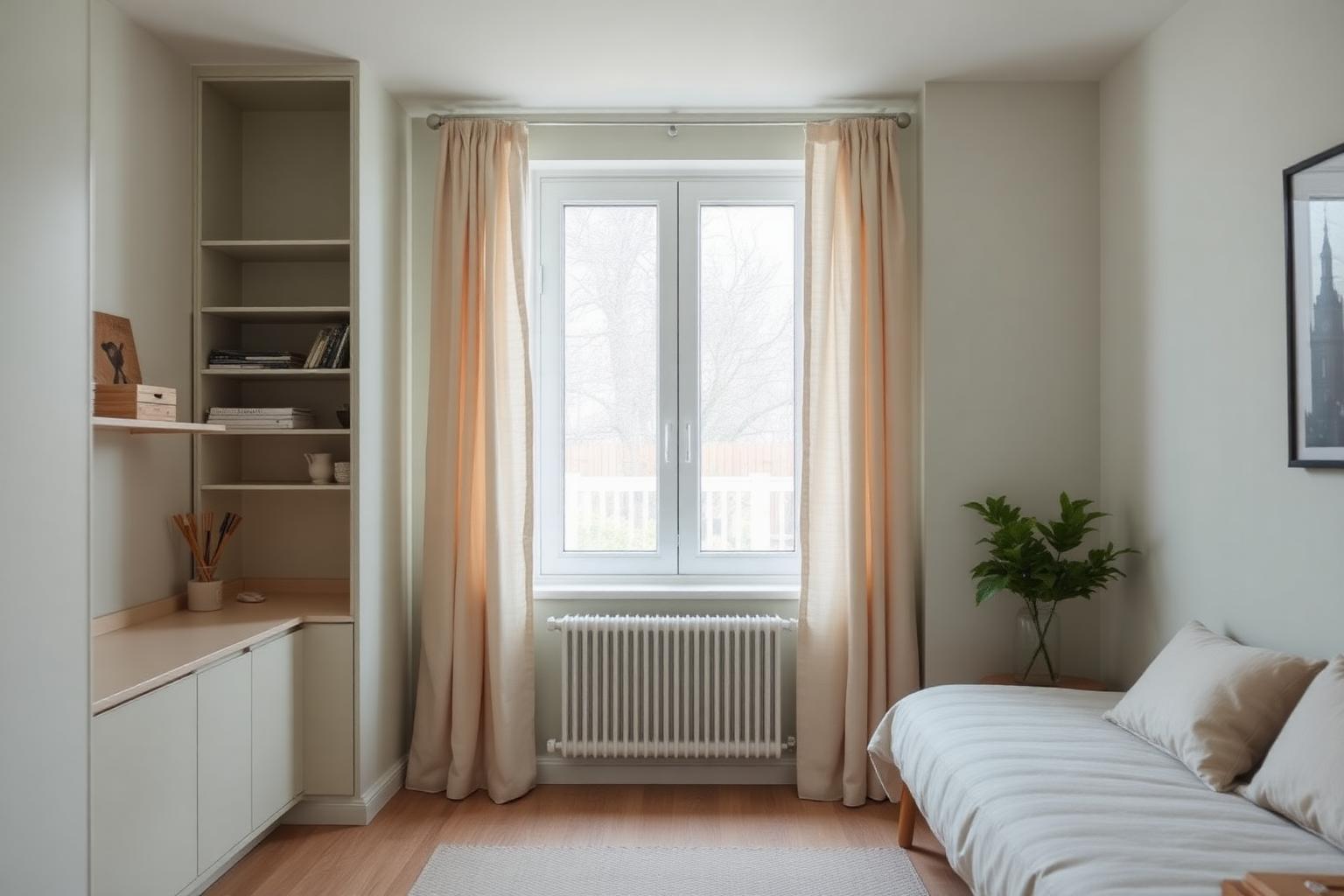
Storage solves the practical problem of a small apartment. Light solves the emotional one. Maximize natural light by keeping window areas clear and using sheer curtains instead of heavy drapes. Add a tall floor lamp (warm bulbs, not cool) in any corner that feels dark. The room will instantly feel larger.
The Color Question
Light walls (cream, soft white, very pale gray) make small rooms feel larger. Dark accent walls can work in tiny spaces but require careful balance. The safest rule for small apartments: light walls, light larger furniture, color introduced through smaller items like pillows, art, and plants.
The Mirror Trick
A single large mirror placed opposite a window approximately doubles the perceived size of a small room and brightens it noticeably. This is the oldest small-space trick in design and it works as well today as it did a hundred years ago. Spend more on this one piece than you would think — a quality framed mirror is the best small-apartment purchase most people never make.
Maintenance
Small apartments require more frequent maintenance than larger homes because clutter shows immediately. Build a 10-minute nightly reset into the routine: clear the coffee table, put kitchen items away, fluff the couch pillows, take laundry out of the bathroom. Ten minutes a day means a small space never reaches the point of needing a real cleaning.
Final Thoughts
A small apartment can be among the calmest, most beautiful homes you ever live in. It just rewards different choices than a large one. Use every surface, work in vertical space, choose one centerpiece per room, and respect the daily reset. Done well, a 500-square-foot apartment can feel more thoughtful and more intentional than a 2,500-square-foot house. That is not consolation. It is a real and overlooked truth.
Filed in Organizing · Small Spaces
More articles