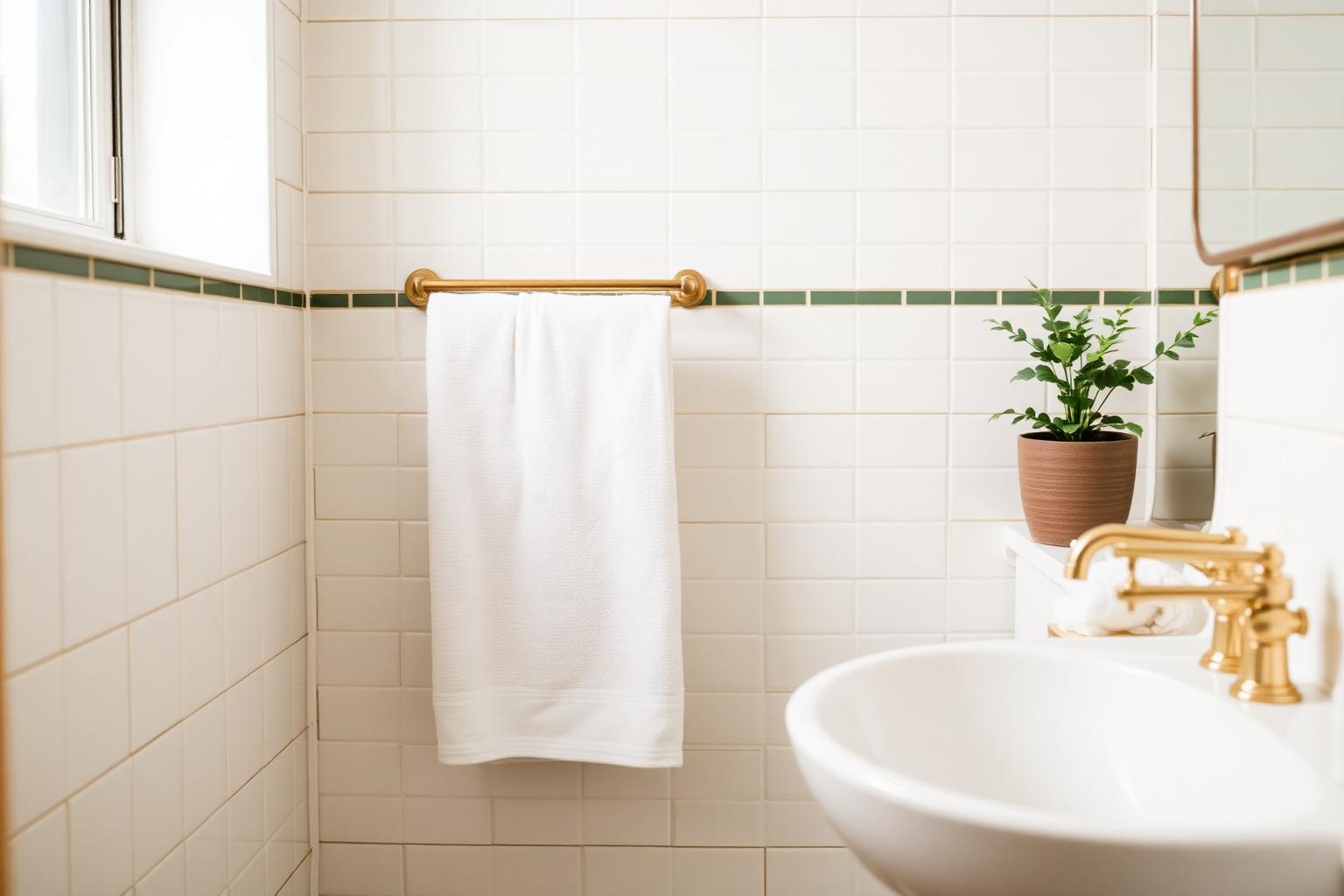
Linen closets have a reputation as a small, unimportant corner of the home. They are actually the small reset that makes the largest difference to how the rest of the house feels. A linen closet you can open with confidence — sheets folded, towels stacked, the bottle of guest soap right where you put it — quietly raises the standard of every guest room and every laundry day.
The reset takes about two hours, costs under 30 dollars in baskets, and the system that follows is among the most low-maintenance organizing projects in the home. Most people redo it once and do not touch it again for years.
The Whole Project, in Order
The reset goes in six steps: empty, sort, declutter, fold, store, label. Each step takes 10 to 20 minutes. Block off an afternoon, put on a podcast, and run the whole thing in one session. Doing it piecemeal almost never works because the staging — half the linens out, half still in — looks worse than what you started with.
Step One: Empty
Take everything out. Lay it on the bed, the floor, or the dining table. Wipe down the empty shelves while you have access. Note any shelves that are too high or too deep to use comfortably; you will work around those later.
Step Two: Sort by Category
Sort everything into seven categories. The seven cover almost every linen closet:
- Bed sheets (by size)
- Pillowcases
- Bath towels and washcloths
- Hand towels
- Kitchen towels and napkins
- Off-season bedding
- Bathroom backstock (soap, shampoo, toilet paper)
If you have a category that does not fit (medical supplies, gift wrap, board games), this is your sign that the linen closet has been doing too many jobs. Move those items to a more appropriate home before you put the linens back.
Step Three: Declutter
Be honest about each item. Towels that are scratchy or stained — toss or rag them. Sheets with no matching pillowcases or with elastic that has given out — recycle (most thrift stores will take old linens as rags). Anything you have not used in two years — donate.
Most people get rid of about 30 percent of what was in the closet. The closet will feel half its previous fullness when you put the rest back.
Step Four: The Folding Question
Fitted sheets are notoriously difficult to fold. There is a method that works (tuck the corners of one short side into the corners of the other, fold the elastic edges inward, then fold the whole thing into a rectangle), but the bigger issue is consistency. The single fold style throughout the closet matters more than which fold style you pick.
Most useful trick: fold all the items in a sheet set inside their matching pillowcase. One pillowcase holds a flat sheet, a fitted sheet, and the spare pillowcase. The whole set becomes one compact bundle that stores cleanly, never separates, and slides out as one unit when you change the bed. This single trick is worth more than every other organizing tip in this guide.
Step Five: Store in Zones
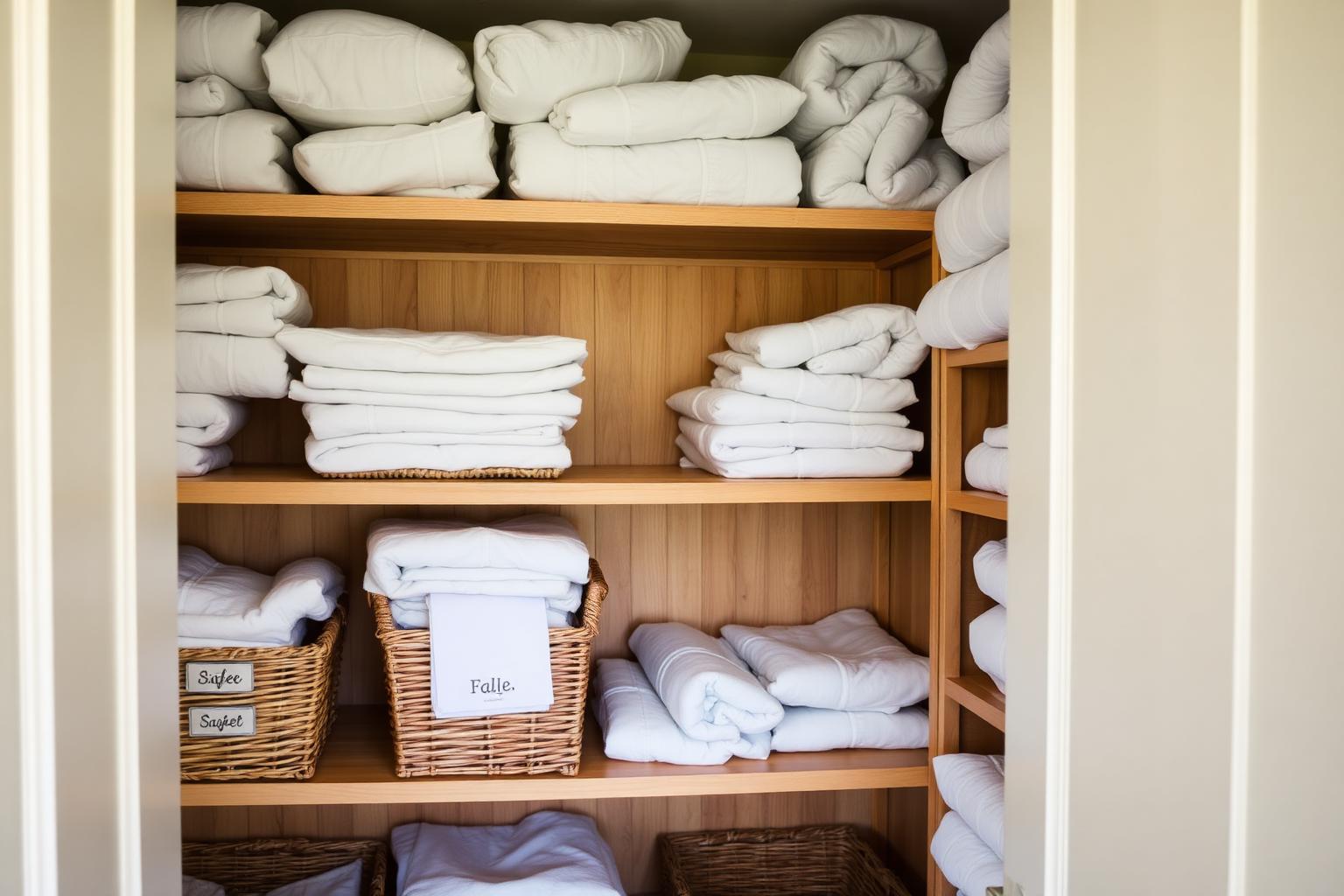
Use the eye-level shelves for what you reach for weekly: current-season bath towels, hand towels, the sheet sets currently in rotation. Use the higher and lower shelves for less-frequent items: off-season bedding, guest sheets, backstock.
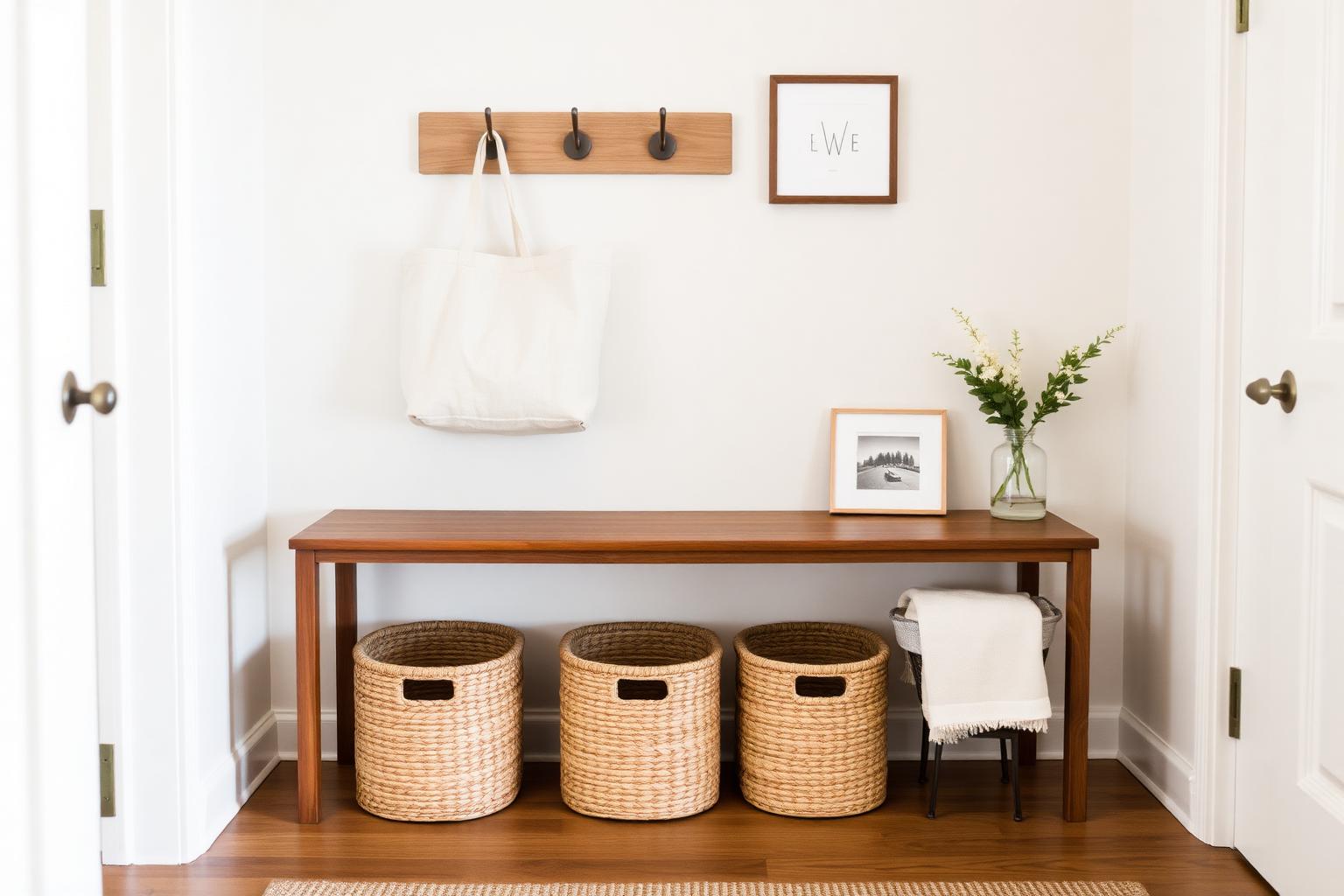
Use baskets to corral small items. A basket for backstock toilet paper. A basket for kitchen towels. A basket for the small bathroom supplies (soaps, lotions). Baskets are not just for looks; they create defined zones inside the closet that prevent items from drifting back into chaos.
Step Six: Label
Labels feel optional in a closet only you use, and they are exactly what makes the system survive. Without labels, the next person to put away laundry (or you, in a hurry) puts things in the wrong place and the system slowly degrades.
Use simple labels: queen sheets, king sheets, twin sheets, bath towels, hand towels, etc. A small label maker is cheap and worth the investment for any home with more than two linen categories.
The One Color Per Room Trick
If your linen closet serves multiple bathrooms or bedrooms, use a different color for each one's linens. The blue towel set lives in the guest bathroom. The green towel set lives in the master. The white set is for the kids. When laundry comes out of the dryer, you do not have to think about which room each item belongs to — the color tells you. This single rule saves a small but meaningful amount of time every laundry day.
Backstock Storage
Bathroom backstock — extra toilet paper, shampoo, soap, toothpaste — quietly takes over linen closets if it is not corralled. Use one specific basket for backstock and limit it to what fits in that basket. When the basket overflows, it is your signal to slow down on buying or to actually use what is already there.
Keeping backstock to one defined container also makes you aware of your inventory, which prevents the household problem of buying your 14th roll of toilet paper because you cannot remember if you already had any.
A linen closet is a small piece of evidence about whether a home is being managed or just being lived in.
The Off-Season Bedding Spot
Off-season bedding (heavy winter duvets in summer, light summer quilts in winter) belongs on the top shelf or in a vacuum-sealed bag elsewhere in the home. Do not let it occupy prime mid-shelf real estate it does not need for half the year. The seasonal swap takes five minutes twice a year and frees up serious space.
What to Skip
Skip the matching set of identical decorative baskets if they cost more than the actual storage problem. Skip the elaborate sheet-folding methods that require a YouTube refresher every time. Skip storing items in the linen closet that have a better home elsewhere. The system works because it is simple, not because it is elaborate.
Maintenance
After the initial reset, the maintenance is to put linens back in the right zones when laundry comes out of the dryer. That is the whole habit. Once a year, do a 15-minute audit: are any zones overflowing? Have any items gone permanently unused? Adjust. The closet stays organized indefinitely.
A Note on Small Linen Closets
If your linen closet is genuinely tiny (or you do not have one at all), the same principles still apply. Use one shelf in a hall closet, the top shelf of the bathroom closet, or a small dresser dedicated to linens. The size of the storage matters less than the system inside it.
Final Thoughts
The linen closet is the small, undervalued piece of household management that quietly affects every overnight guest, every laundry day, and every late-night sheet change. Two hours and 30 dollars of baskets turn it from a place of small daily frustration into one that feels deeply solved. Run the reset once and you will wonder why you waited as long as you did.
Filed in Organizing · Small Spaces
More articles