There is a category of household problem that only ever shows up in January, when fixing it is most expensive, most miserable, and most disruptive. A burst pipe at 11pm in a snowstorm. A furnace that dies during a cold snap. Ice damming on the roof. A draft that doubles the heating bill. Almost every one of these problems started months earlier and could have been prevented with an afternoon of work in October.
This is the quiet fall prep list I run through every year. It takes about a single Saturday, costs under 100 dollars in supplies and replacements, and reliably saves multiples of that in avoided emergencies and lower heating bills. It is also satisfying in the way most seasonal work is — a clear list, a defined endpoint, and a noticeable improvement.
Why Fall Prep Pays Back
Winter stresses every weak point in a home. Cold contracts metal and wood. Freeze-thaw cycles widen every crack. Heating systems run hard for the first time in months. Snow and ice add weight and water that summer never tests. A house that has been prepped handles all of this. A house that has not been is doing chemistry it was not ready for.
Most fall prep tasks take 20 minutes or less individually. Done in one batch, the whole list is a comfortable afternoon.
1. Clean the Gutters
This is the single highest-impact fall task. Clogged gutters cause ice dams (water backs up under shingles, freezes, lifts the shingles, and leaks into the house), foundation damage (overflow water pools next to the foundation and seeps into the basement), and rotted fascia (constant moisture rots the wood behind the gutters).
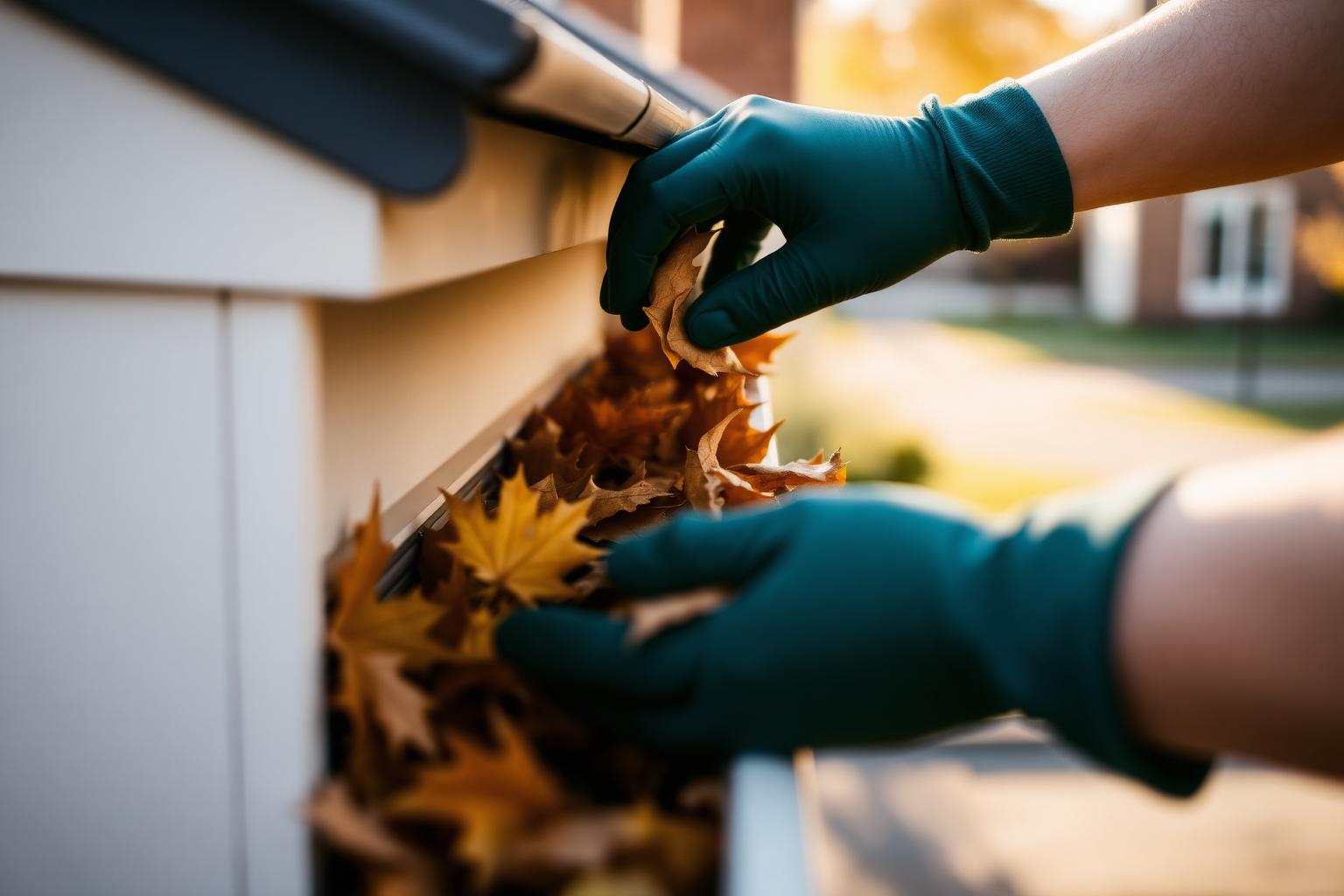
Pull on gloves, set a ladder on level ground, and scoop out the leaves and debris by hand into a bucket. Then flush the gutter with a garden hose and watch for proper flow through the downspouts. If water backs up, the downspout is clogged — most clogs clear with the hose pressure or a plumbing snake.
If your house is over one story and you are uncomfortable on a ladder, hire this out. It is about 150 dollars and the most important thing you can do for the house before winter.
2. Service the Furnace
Replace the furnace filter. This is the single most ignored maintenance item in any home and the single most damaging to system longevity. A dirty filter strains the blower motor, reduces efficiency, and shortens the life of the entire system. Filters cost 10 to 20 dollars and take two minutes to change. Do it every three months minimum.
Then schedule a furnace tune-up if you have not had one in over a year. A pro will clean the burner, check the heat exchanger for cracks (a safety issue), test for carbon monoxide leaks, and confirm the system is running efficiently. About 100 to 150 dollars. Often required to maintain manufacturer warranties.
3. Test Smoke and CO Detectors
Press the test button on every smoke detector and carbon monoxide detector in the house. Replace the batteries (even if they still work — fresh ones at the start of winter mean no 3am chirping in February). Replace any detector older than ten years; they expire and stop sensing correctly.
Winter is the peak season for CO poisoning because of furnaces, fireplaces, and tightly sealed homes. A working detector on every floor and near every bedroom is non-negotiable.
4. Drain Outdoor Faucets and Disconnect Hoses
Water left in outdoor faucets and hoses expands when it freezes and can crack the pipe inside your wall — sometimes silently, with the leak only revealing itself when it thaws in spring and your basement floods.
Disconnect every hose, drain it, and store it in the garage or basement. Turn off the indoor shut-off valve for each exterior faucet (usually located on the basement wall behind the faucet). Open the outdoor faucet to drain any residual water. Install foam faucet covers (3 dollars each) over the spigots for extra insurance.
If you have an irrigation system, schedule a blowout — compressed air clears every line so nothing freezes underground. About 75 to 125 dollars and absolutely worth it.
5. Seal Drafts
On a windy day, walk through your home with a stick of incense or a lit candle. Wherever the smoke or flame moves visibly, you have a draft. Common culprits: window edges, door bottoms, electrical outlets on exterior walls, attic hatches, basement rim joists.
Most drafts are fixed with 10 dollars of materials: adhesive weatherstripping for door and window frames, a door sweep for the gap under exterior doors, foam outlet gaskets for outlets on exterior walls, and a roll of caulk for any visible gaps around window trim. Half a Saturday, measurable bill savings all winter.
6. Check the Roof
Walk around the house and look up. Missing shingles, dark streaks, sagging sections, or visible damage all need attention before snow loads it up. If anything looks off, hire a roofer for an inspection — about 150 to 250 dollars and far cheaper than a roof leak in February.
Also check the flashing around chimneys, skylights, and vents. Failed flashing is one of the most common sources of winter leaks and is fixable in good weather, miserable in cold.
7. Insulate Pipes in Unheated Spaces
Pipes that run through garages, crawlspaces, attics, or near exterior walls are at risk in deep cold. Foam pipe insulation costs about 3 dollars per six-foot section and takes minutes to install — it slips over the pipe and seals with adhesive. Insulate every visible pipe in any unheated space.
8. Reverse Ceiling Fans
Most ceiling fans have a small switch on the motor housing that reverses direction. In winter, you want them spinning clockwise on the lowest setting. This pushes warm air that has risen to the ceiling back down along the walls, distributing heat more evenly. The change in room comfort is noticeable, and the savings on heating add up.
9. Sweep the Chimney (If You Have One)
If you use your fireplace, the chimney needs a yearly sweep to prevent creosote buildup (a serious chimney fire risk) and to confirm the flue is clear. About 150 to 250 dollars and absolutely not optional if the fireplace gets regular use.
10. Stock Winter Supplies
Before the first storm: a bag of ice melt (calcium chloride works in deeper cold than rock salt), a sturdy snow shovel, fresh batteries for flashlights, a battery-powered radio, and a few gallons of bottled water for power-outage scenarios. None of this is glamorous. All of it matters at hour three of a winter outage.
A house gets through winter on the maintenance you did in October. Skip the fall and pay for it in January.
A Quick Note on Hiring vs DIY
Most of this list is comfortable DIY work — gutters, filters, weatherstripping, hoses, fans. A few items (furnace tune-up, chimney sweep, irrigation blowout) genuinely benefit from a pro, both for safety and warranty reasons. Budget about 400 to 600 dollars for the pro items if you use all of them. Compared to a single emergency call in January (often 800 to 1500 dollars before any actual repair), it is the obvious better deal.
Final Thoughts
Fall prep is the most thankless category of home maintenance — nothing visible improves, the rooms do not look different, no guest will ever compliment you on your sealed drafts or your descaled water heater. But the absence of winter disasters is its own quiet reward. Run the list once in a single afternoon, mark it on the calendar to repeat every October, and your winters get reliably calmer year after year. That is exactly what a well-cared-for house feels like.
Filed in Home & DIY · Seasonal Care
More articles