Capsule wardrobes have a marketing problem. The way they are usually pitched — 30 pieces, all neutral, donate the rest to a thrift store this weekend — makes them sound extreme. Most of the people who would benefit from a capsule wardrobe never start because the leap feels too big and a little wasteful. Throwing perfectly good clothes in a donation bag because a blog told you to is not a path to a calmer wardrobe. It is a path to buying replacements next spring.
There is a gentler version that works just as well. It starts with the clothes you already own, builds the capsule over a single season, and lets the rest of your closet stay put while you figure out what you actually wear. Three months in, the unworn clothes are obvious, and donating becomes natural instead of guilty.
What a Capsule Wardrobe Actually Is
A capsule wardrobe is a small set of clothing pieces, usually 30 to 50 items, that work together so that any combination looks intentional. The pieces share a color palette, fit you well, and cover every situation your real life puts you in. The promise is less decision fatigue, more confidence, and a closet that feels calm instead of overstuffed.
Crucially, a capsule does not require throwing anything out. It just requires identifying the smaller set within your closet that does the heavy lifting, and then learning to lean on those pieces more.
Step One: Pick a Palette
Open your closet and look at the dominant colors. Most people, when they look honestly, find that their closet has 3 to 5 colors that show up over and over and a handful of one-off pieces in other shades. Those dominant colors are your palette — not the one a stylist would pick, but the one your past self has already been quietly choosing for years.
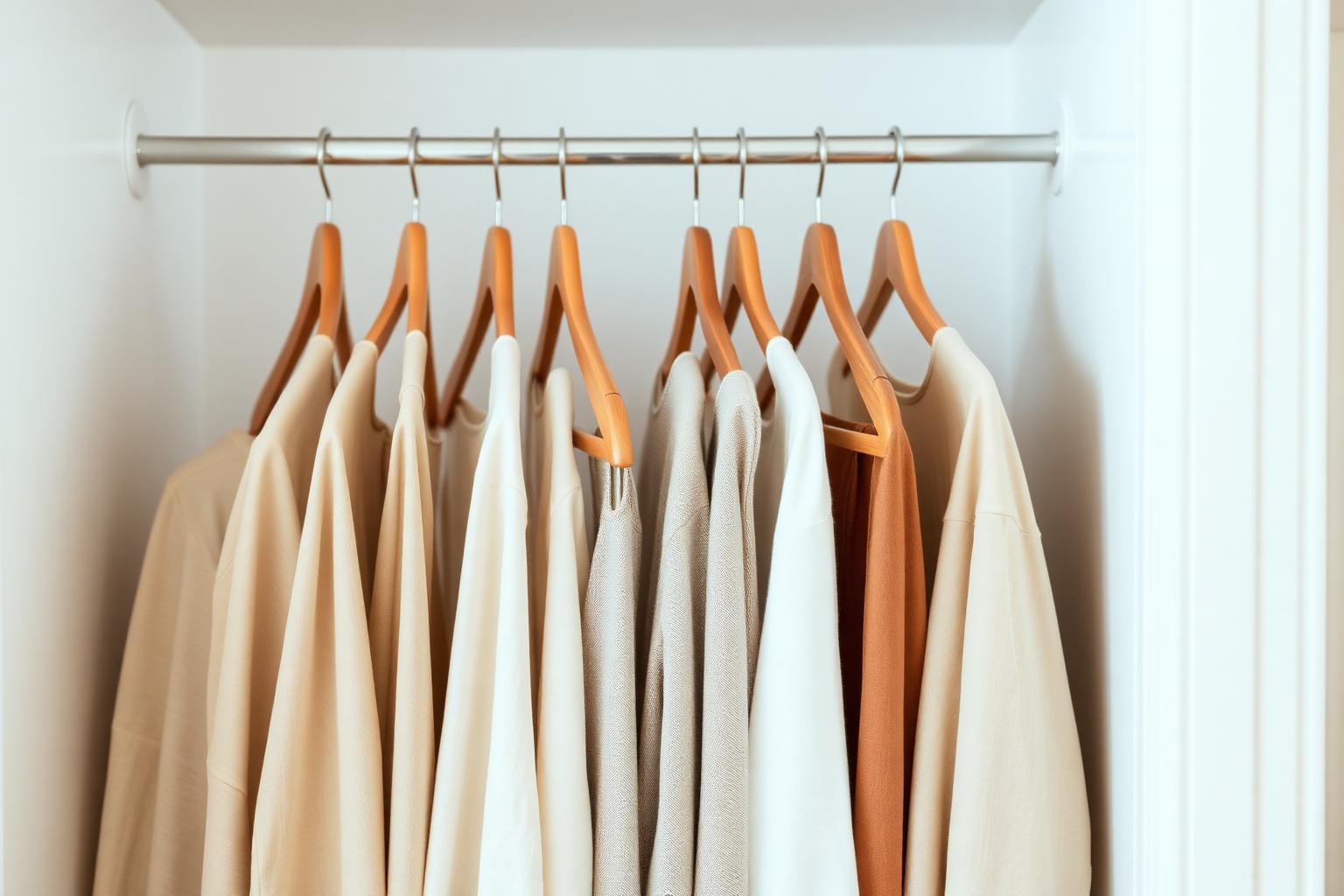
For most people, a good capsule palette has two neutrals (typically navy, black, gray, cream, or beige), one warm accent (rust, mustard, terracotta), and one cool accent (sage, dusty blue, lavender). Other colors can still live in your closet; the capsule just runs on these.
Step Two: The Hanger Trick
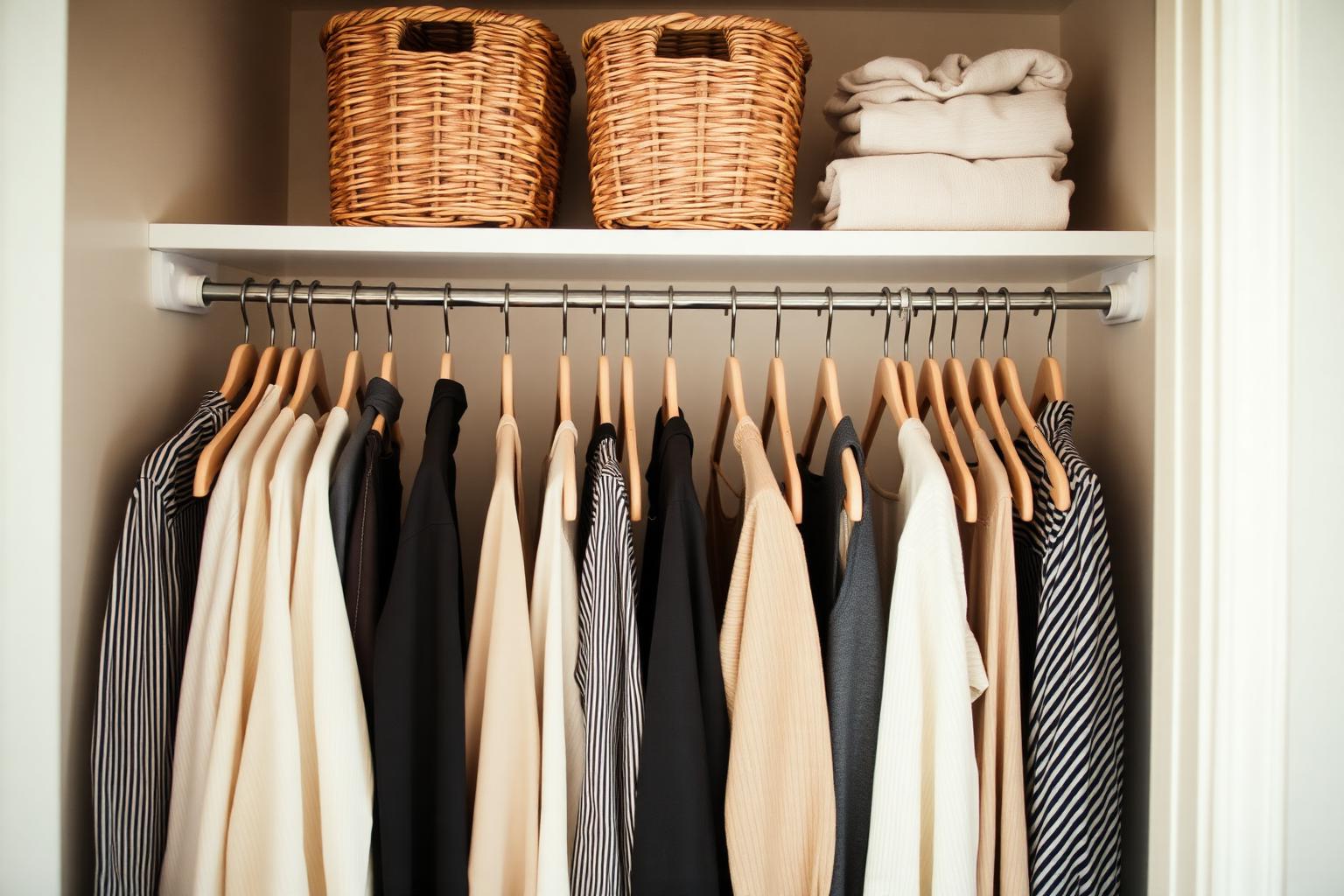
This is the single most useful step in building a capsule from clothes you already own. Turn every hanger in your closet so the hook faces outward (the wrong way). Every time you wear something and put it back, return the hanger the right way. For folded items, do the same with a folded shirt stack — turn each shirt 90 degrees back to normal after you wear it.
After three months, you can see at a glance every piece you actually wore (right-way hangers) and every piece you did not (wrong-way hangers). The wrong-way pieces are your candidates for donating, selling, or moving to off-season storage. The right-way pieces are your real wardrobe.
Step Three: Identify the Workhorses
Within the right-way pieces, there will be a smaller subset you wore twice or more. These are your workhorses — the items that genuinely earn their closet space. Most people are surprised to find that they have only 20 to 30 true workhorses, even if their closet holds 200 items.
Pull the workhorses out and lay them on the bed. This is the foundation of your capsule. The rest of the closet is supporting cast.
Step Four: Identify the Gaps
Look at your workhorses honestly. What do they collectively give you, and what do they not? Common gaps include:
- A neutral cardigan you can wear over almost anything
- A pair of shoes that go with everything
- A jacket for the in-between weather of fall and spring
- A simple white or cream button-down
- A pair of pants that fit perfectly and feel like nothing
Make a small list — three to five items, no more — of the gaps. These are the things to slowly add to your capsule over the next season, one at a time, when you genuinely find the right piece.
Step Five: The Quality Rule
When you add to a capsule, the rule is quality over quantity. A capsule lives on its workhorses, and workhorses get worn weekly or more. Cheap fabric and bad construction wear out fast under that level of use. A 70-dollar pair of pants that lasts five years costs less per wear than four 20-dollar pairs that pill after six months.
This does not mean expensive automatically equals quality. Look for natural fibers (cotton, linen, wool, silk), good seams, lined pockets, and a fit that feels right without being held together by elastic.
Step Six: Off-Season Storage
Put your off-season clothes (heavy sweaters in summer, sundresses in winter) in a separate location — a top shelf, under-bed storage, or a different closet. This single move makes a closet feel dramatically lighter without losing any clothes.
Swap the seasons twice a year. The act of swapping is also a natural time to evaluate what got worn last season and what did not.
Step Seven: The Outfit Formula
Once your capsule is settled, build a few outfit formulas you can rely on without thinking. Mine looks something like: dark pants + light top + neutral cardigan + simple shoes. Yours might be: dress + denim jacket + boots. Three or four formulas you can apply to your capsule pieces means you can get dressed in two minutes flat and still look intentional.
Formulas are not about being boring. They are about removing decisions so you have more attention for the rest of your day.
A capsule wardrobe is not about owning less. It is about wearing more of what you actually own.
What to Do With the Pieces You Don't Wear
After three months with the hanger trick, you will have a clear set of unworn pieces. Resist the urge to throw them all out at once. Sort them into three categories:
- Sentimental or special-occasion: keep, store elsewhere
- Genuinely no longer your style: donate or sell
- Could go either way: store in a bin in the closet, revisit in six months
The middle category — donate or sell — is where the calmer closet emerges. Drop the donate bag at a local charity within a week. Selling is fine but tends to drag out; pick a single platform (Poshmark, eBay, ThredUp) and limit yourself to ten items at a time.
Building a Capsule When Your Life is Many-Sided
If your life includes a work wardrobe, a weekend wardrobe, and a gym wardrobe that are genuinely different, build three small capsules instead of one large one. Each capsule follows the same rules — shared palette, identified workhorses, slow additions — but they exist somewhat separately. A single 90-piece wardrobe that splits into 3 × 30 will still feel calmer than the chaos most people work with.
A Note on Trends
The biggest threat to a capsule wardrobe is the urge to buy a single trend piece every few months. One trend piece is fine; it is fun, and a capsule is not a prison. The trap is the second and third trend piece, which gradually replace your workhorses in your closet without actually replacing them in your laundry rotation. Limit trend purchases to one per season, and only after a workhorse has worn out.
Final Thoughts
A capsule wardrobe built from what you already own is calmer, cheaper, and far more sustainable than the version that requires a big donation purge. The hanger trick is the trick — it turns months of guesswork into one clear answer about what your real wardrobe is. Try it for a season. By the end you will have a capsule whether you set out to build one or not.
Filed in Organizing · Closet & Bedroom
More articles