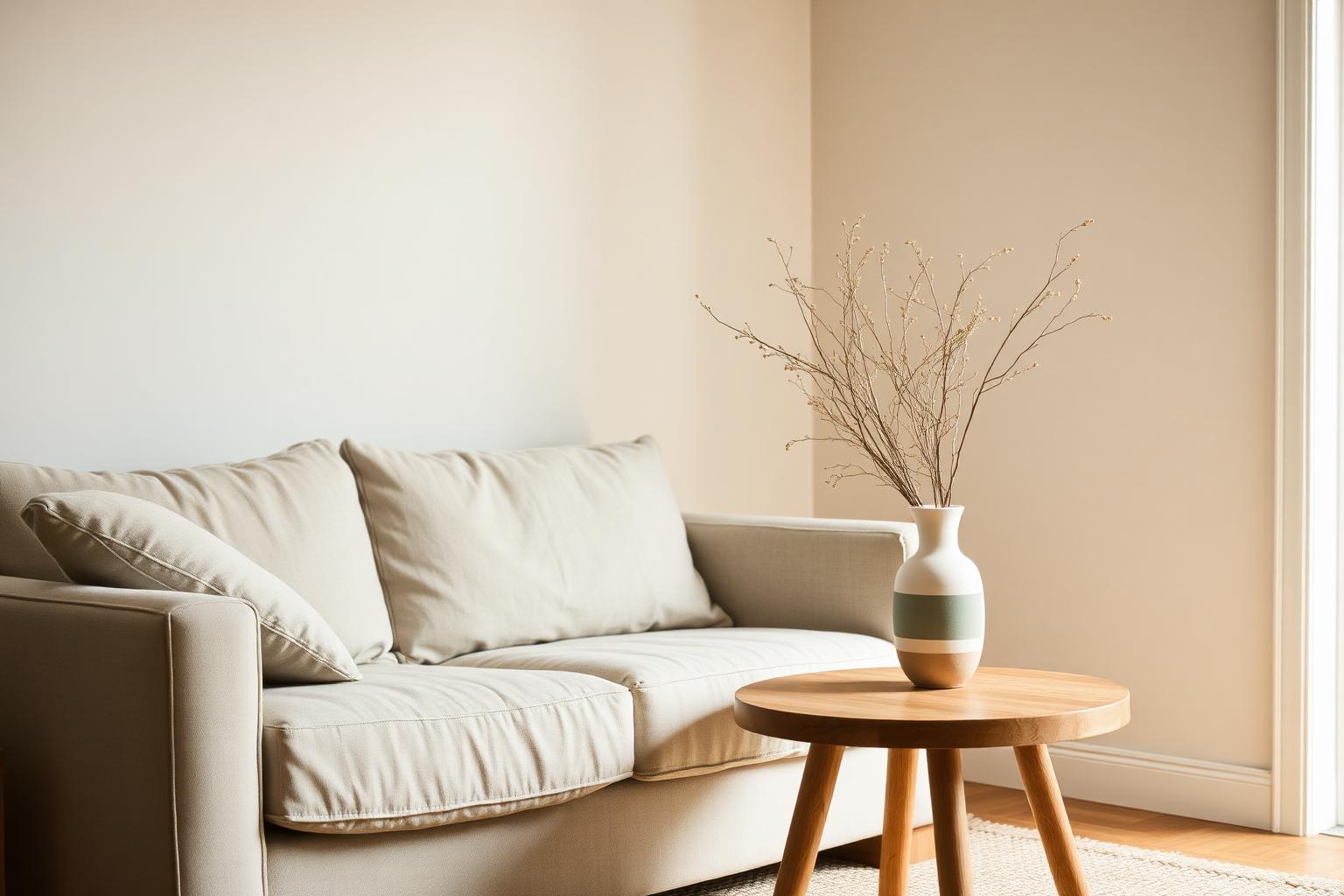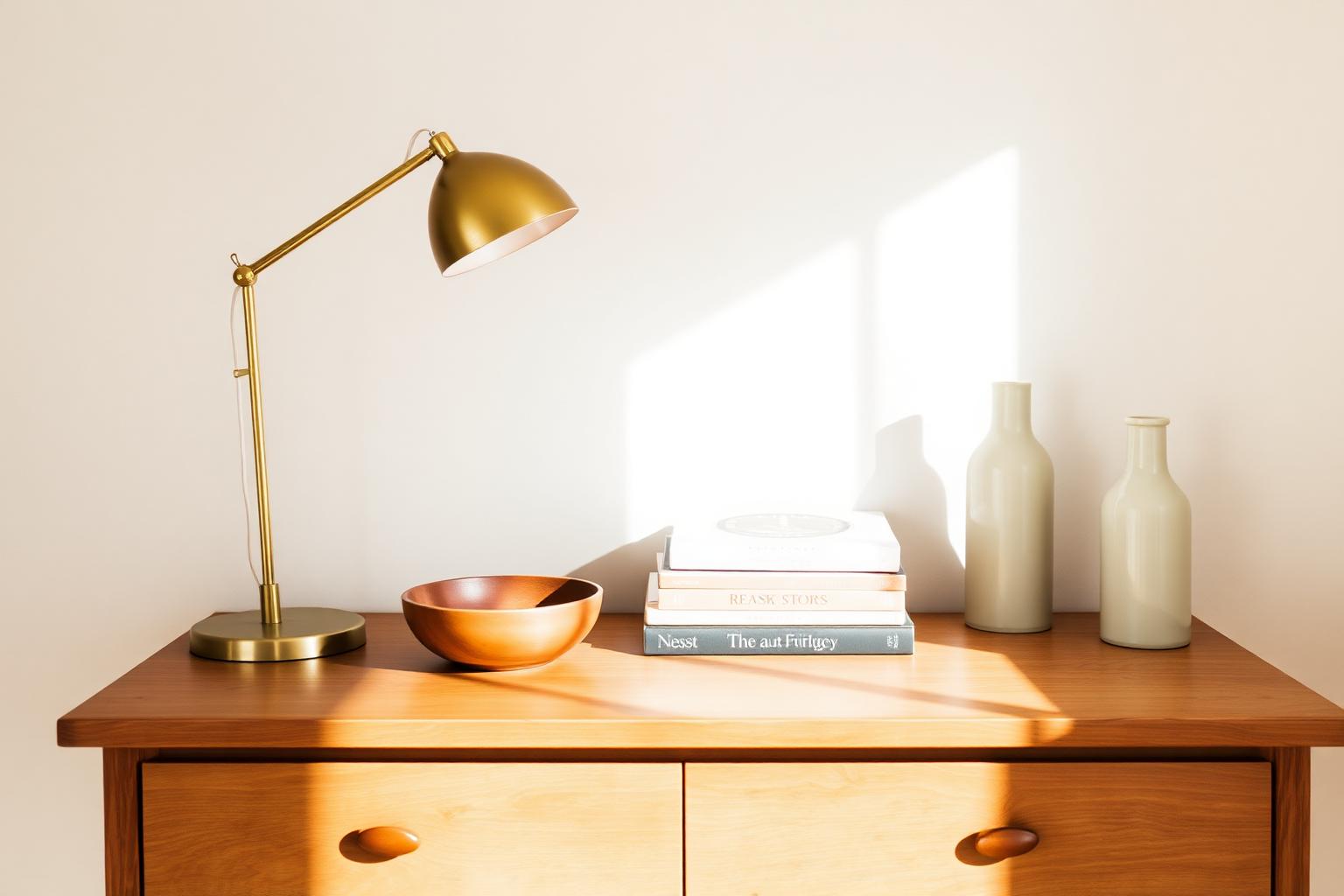
Minimalism, done poorly, looks like a dentist's waiting room. White walls, a gray sofa, a single skinny plant in the corner, and the unmistakable feeling that nobody actually lives here. Done well, it looks like a place you'd want to spend a Sunday afternoon — quiet, warm, lived-in, and somehow still uncluttered.
The difference between the two is not the amount of stuff. It is the texture, the temperature of the light, and the willingness to let a room feel finished. After styling four of my own living rooms and helping friends with twice that many, here is the framework I keep coming back to.
Start With the Temperature, Not the Furniture
The single biggest mistake in minimalist rooms is cool color temperature. Cool white bulbs, gray paint, white walls, chrome accents, and black-framed everything together create a room that photographs well and feels awful to sit in. The eye reads it as a workspace, not a home.
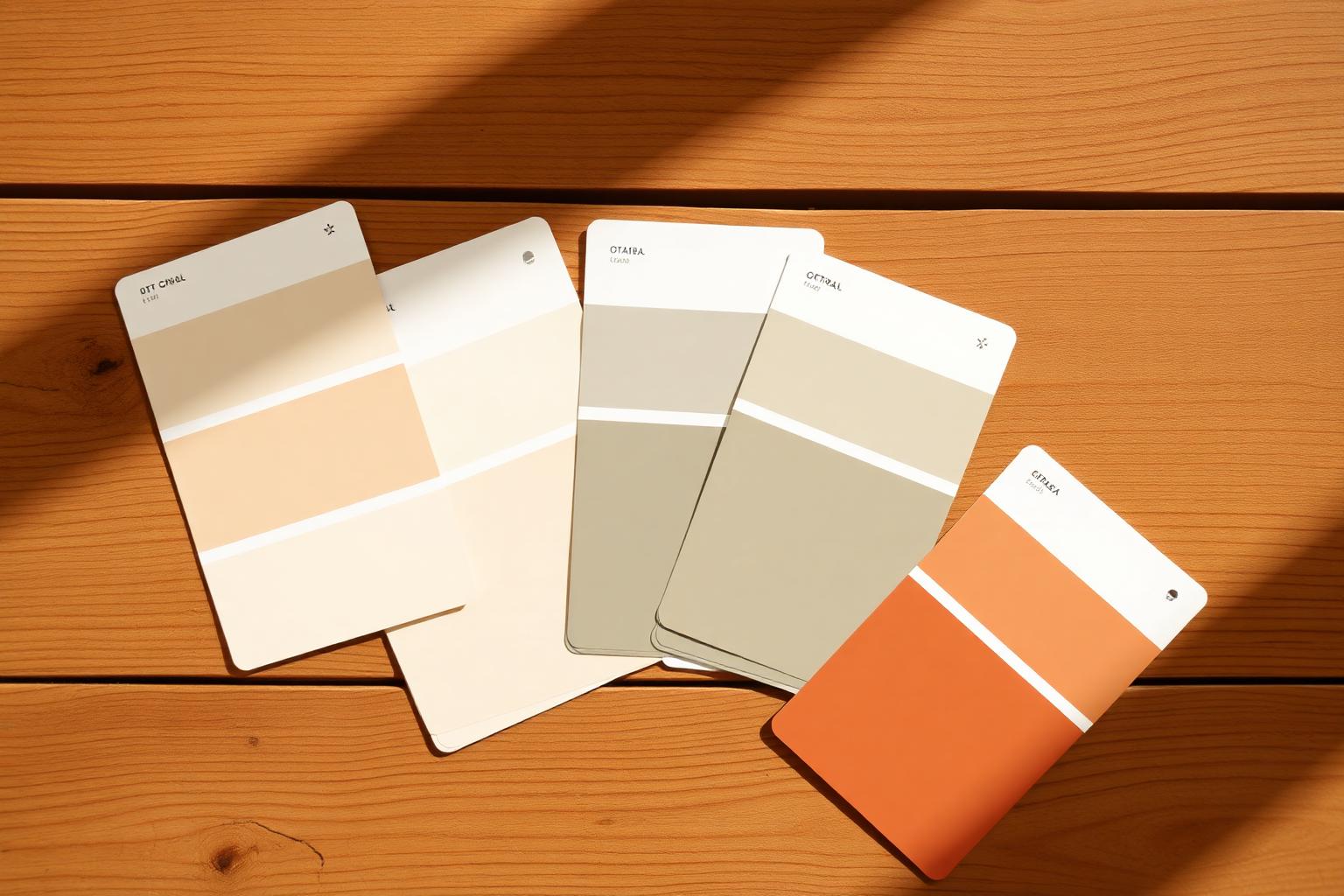
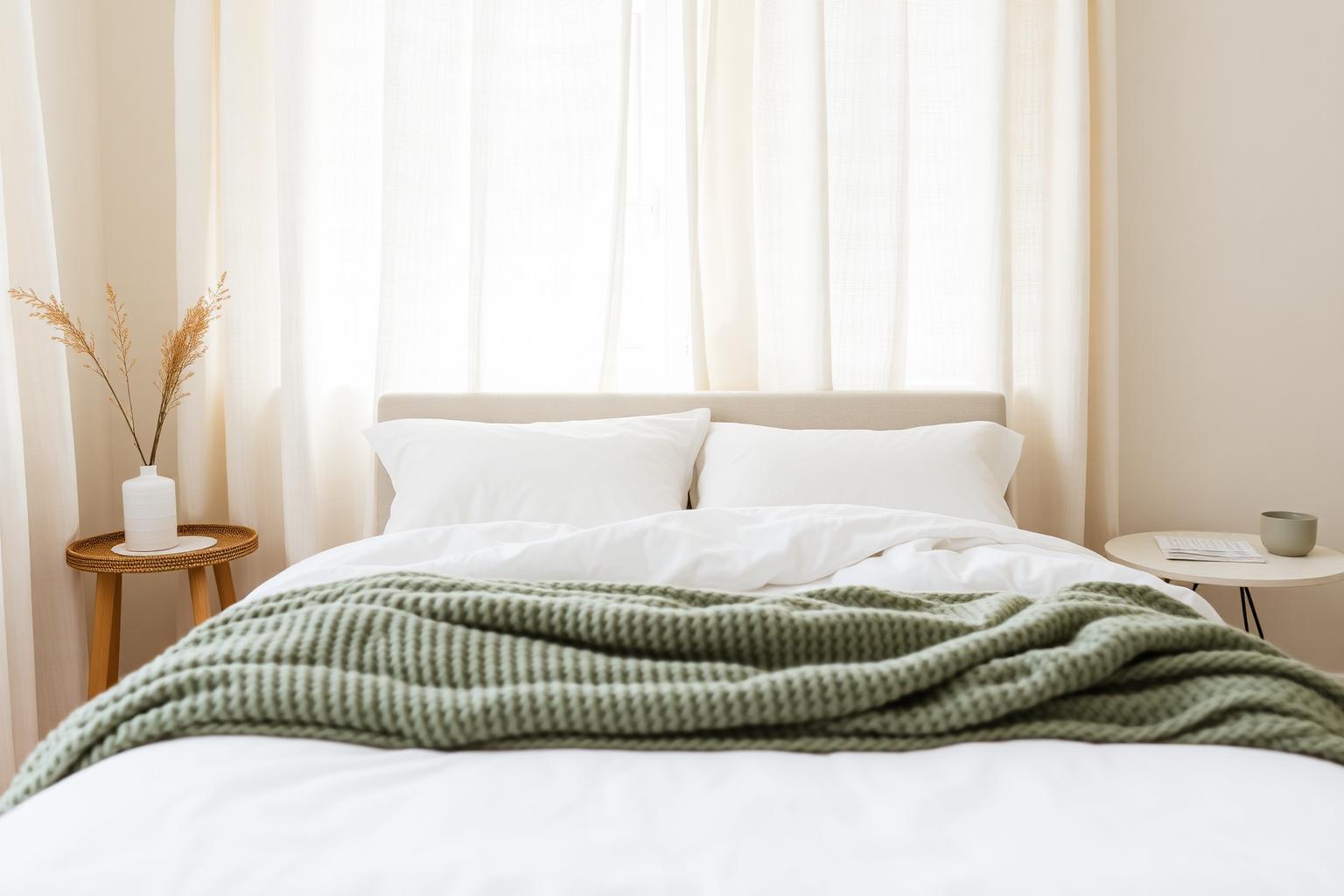
Before you move a single piece of furniture, audit the temperature of your room. Walls in the cream-to-warm-white range (think Benjamin Moore White Dove, Farrow & Ball Pointing, Sherwin-Williams Alabaster) immediately make a space feel kinder. Wood tones — even one piece of mid-tone oak or walnut — anchor everything around them. And 2700K bulbs (warm white, not daylight) make the entire room feel like late afternoon all day.
The 60/30/10 of Warm Minimalism
Designers talk about color in a 60/30/10 ratio. For warm minimalism specifically, the breakdown that works almost every time is:
- 60% neutral foundation: warm white walls, oatmeal or linen upholstery, cream curtains
- 30% natural texture: wood, woven jute, raw stone, terracotta, leather
- 10% accent: one or two carefully chosen darker pieces (black lamp, charcoal throw, deep green plant)
The trick is committing to the percentages. Most rooms fail because they are 60% neutral, 10% texture, and 30% miscellaneous things the homeowner bought because they were on sale. Get the texture up and the miscellaneous down.
Layer Texture Aggressively
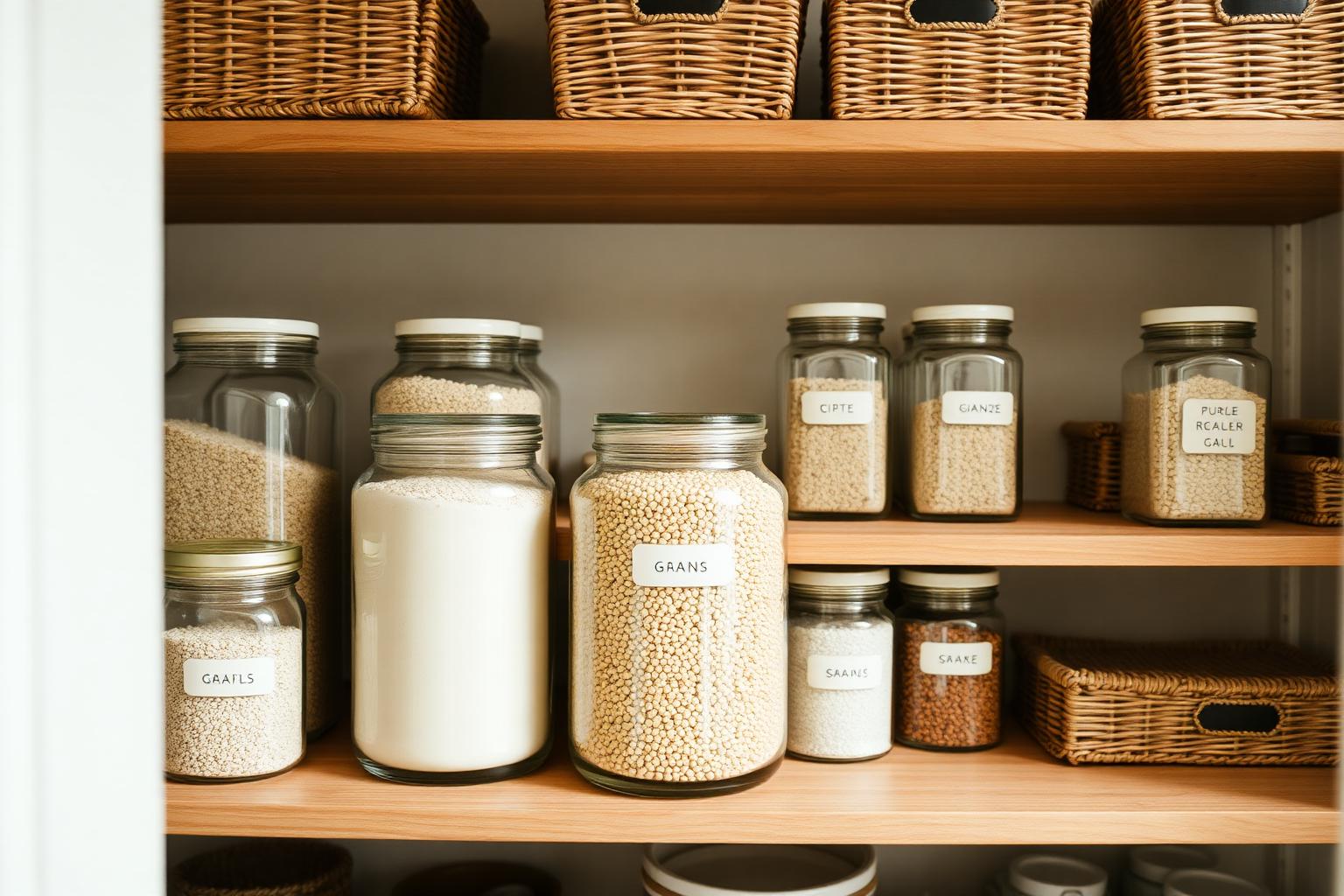
Minimalism without texture is just emptiness. A room with one sofa, one rug, one table, and one lamp is sparse. A room with the same furniture plus a linen throw, a chunky knit pillow, a small woven basket, a wooden bowl, and a stone vase is minimalist. Same number of large pieces, completely different feeling.
When you stand in the doorway, count the distinct textures you can see. Aim for at least seven: smooth painted wall, woven rug, linen sofa, knit throw, wood tabletop, ceramic lamp base, glass window. Below five textures and a room reads as flat. Above ten and it starts to feel busy.
The One-Hero Rule
Every minimalist room needs one piece that earns the eye. A statement art piece, a sculptural pendant light, a single oversized plant in a beautiful pot, a vintage chair. One hero, not five. The point of pared-back styling is that the few things in the room get to be properly looked at.
Resist the urge to make every wall a hero. Save the impact for one focal point and let the rest of the room support it. A blank wall is a feature, not a failure.
Furniture: Fewer, Bigger, Better
Three correctly sized pieces beat seven small ones every time. A genuinely deep, comfortable sofa, one substantial coffee table, and two real armchairs out-perform a sofa plus loveseat plus accent chair plus ottoman plus side table plus side table plus bench. The room reads as calm because the furniture has space to exist.
If you can only buy one statement piece, make it the sofa. It is the largest object in the room, the one your body interacts with most, and the one whose quality is most felt over years of use. A great sofa makes a budget rug look intentional. A cheap sofa makes an expensive rug look confused.
Soft Window Treatments
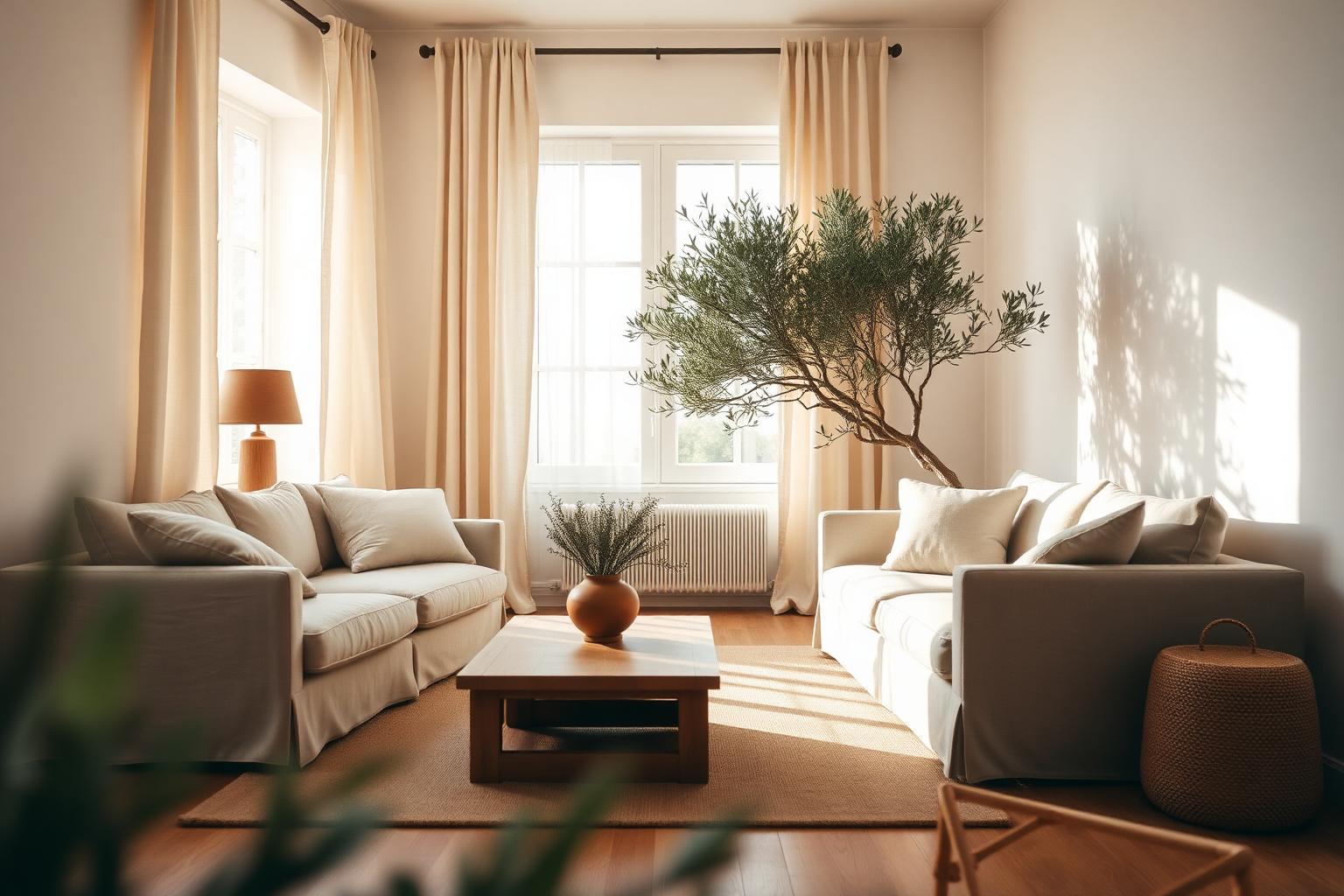
Bare windows in a minimalist room amplify the cold-and-empty feeling. Floor-to-ceiling linen curtains, even when left mostly open, add an enormous amount of warmth and quiet. Hang the rod close to the ceiling (not above the window frame), let the curtains pool slightly on the floor, and choose unlined linen so the light filters through softly.
If you cannot do full curtains, a simple roman shade in a warm natural fabric does most of the same work for less money. Avoid blackout vinyl, plastic blinds, and any window treatment that snaps closed loudly. Sound matters in a room you are trying to make calm.
Minimalism is not the absence of things. It is the presence of only the right things, given enough room to be seen.
The Plant Question
One large plant beats five small ones. A six-foot fiddle leaf, olive tree, or kentia palm in a single sculptural pot does more for a minimalist room than a windowsill of three-inch succulents. Real plants beat fake plants almost every time, but a high-quality faux olive tree in a real terracotta pot fools almost everyone and never dies on a busy week.
If you do not have light for a large plant, the next best thing is a substantial branch in a tall vase. Magnolia, eucalyptus, or curly willow — even dried — read as sculptural and intentional, not as a sad substitute.
Edit Ruthlessly
Once the basics are right, the final move is removing things. Stand in the doorway and identify the three items in the room that feel like clutter. Move them to another room for a week. If you do not miss them, donate or move them permanently. Repeat monthly until the room feels right.
The eye relaxes in a room with empty space on shelves, empty space on walls, and empty space on tables. You are not styling for a magazine photo. You are styling for the part of your brain that wants to exhale when you walk into the room.
A Word on Trends
Warm minimalism endures because it is not a trend — it is what most people quietly want from their living room. Trends (boucle everything, mushroom lamps, checkerboard rugs) come and go on a two-year cycle. A linen sofa, an oak coffee table, a beautiful wool rug, and warm white walls have looked right for forty years and will look right for forty more. Spend your money on the foundations and let the accents change cheaply.
Final Thoughts
A warm minimalist room is the result of subtraction, not addition. The work is mostly editing — removing what does not earn its place, replacing cool tones with warm ones, swapping plastic for wood and synthetic for linen. Done in pieces over a season or two, the room slowly becomes the one you look forward to coming home to. That is the whole point.
Filed in Home & DIY · Decor & Styling
More articles