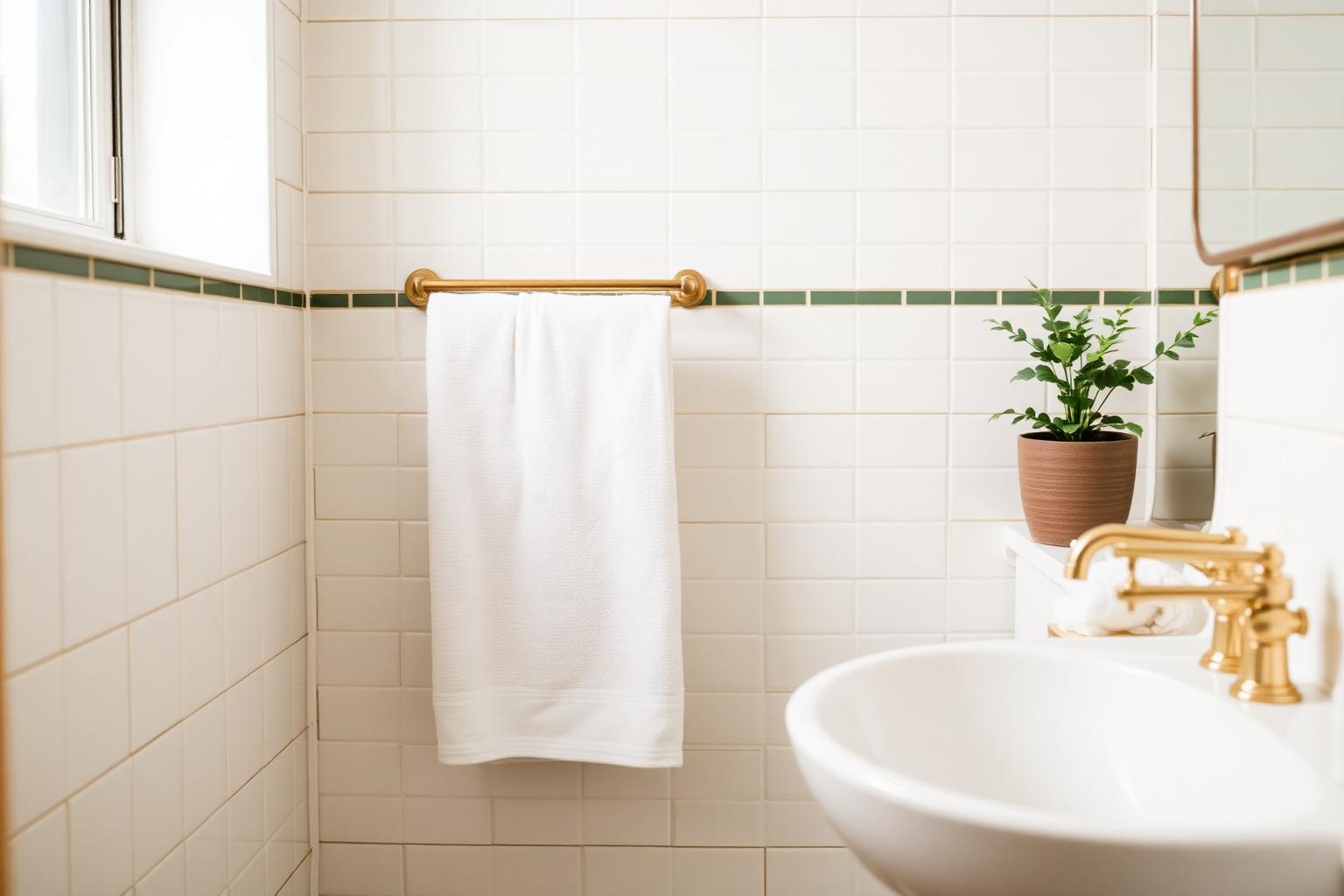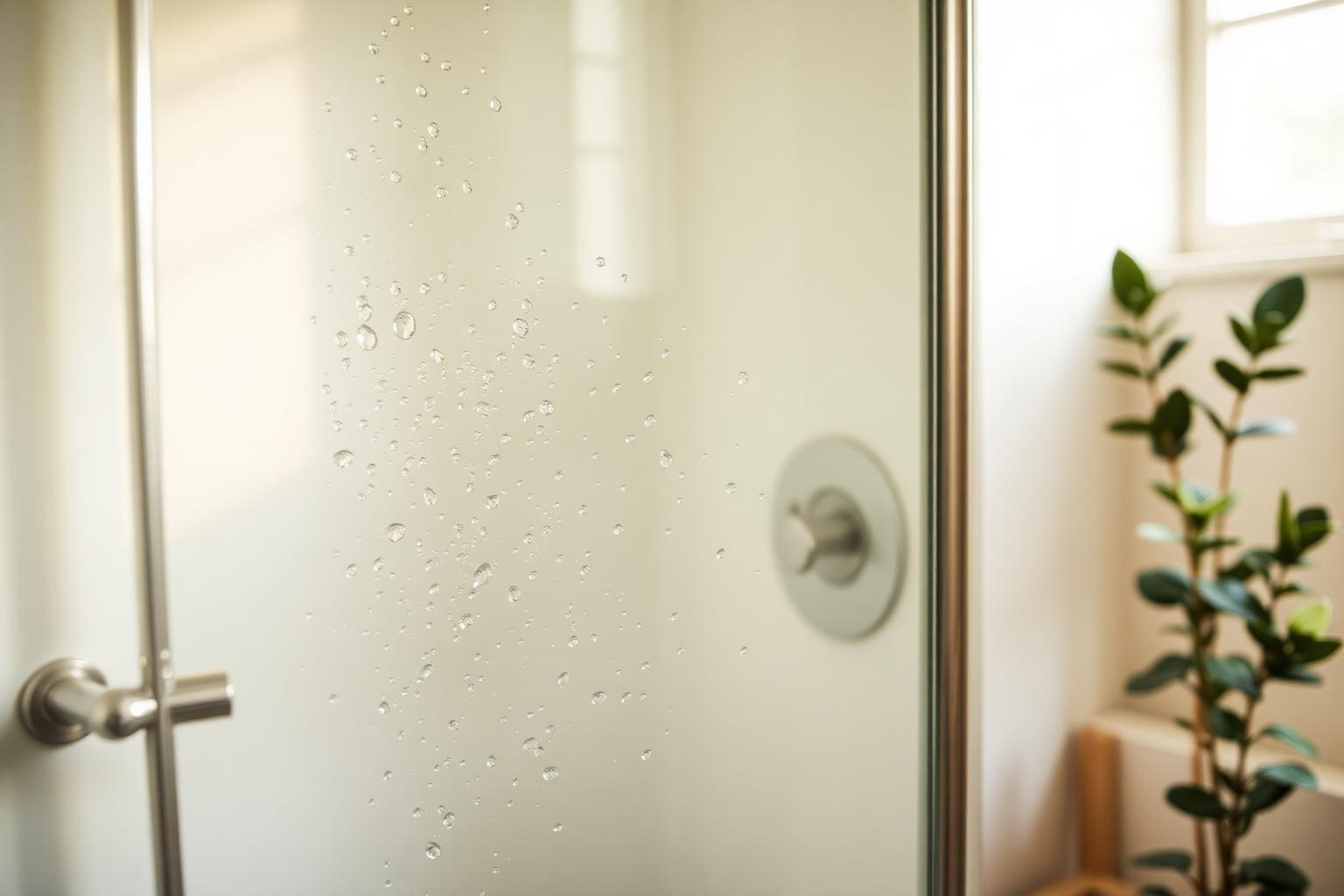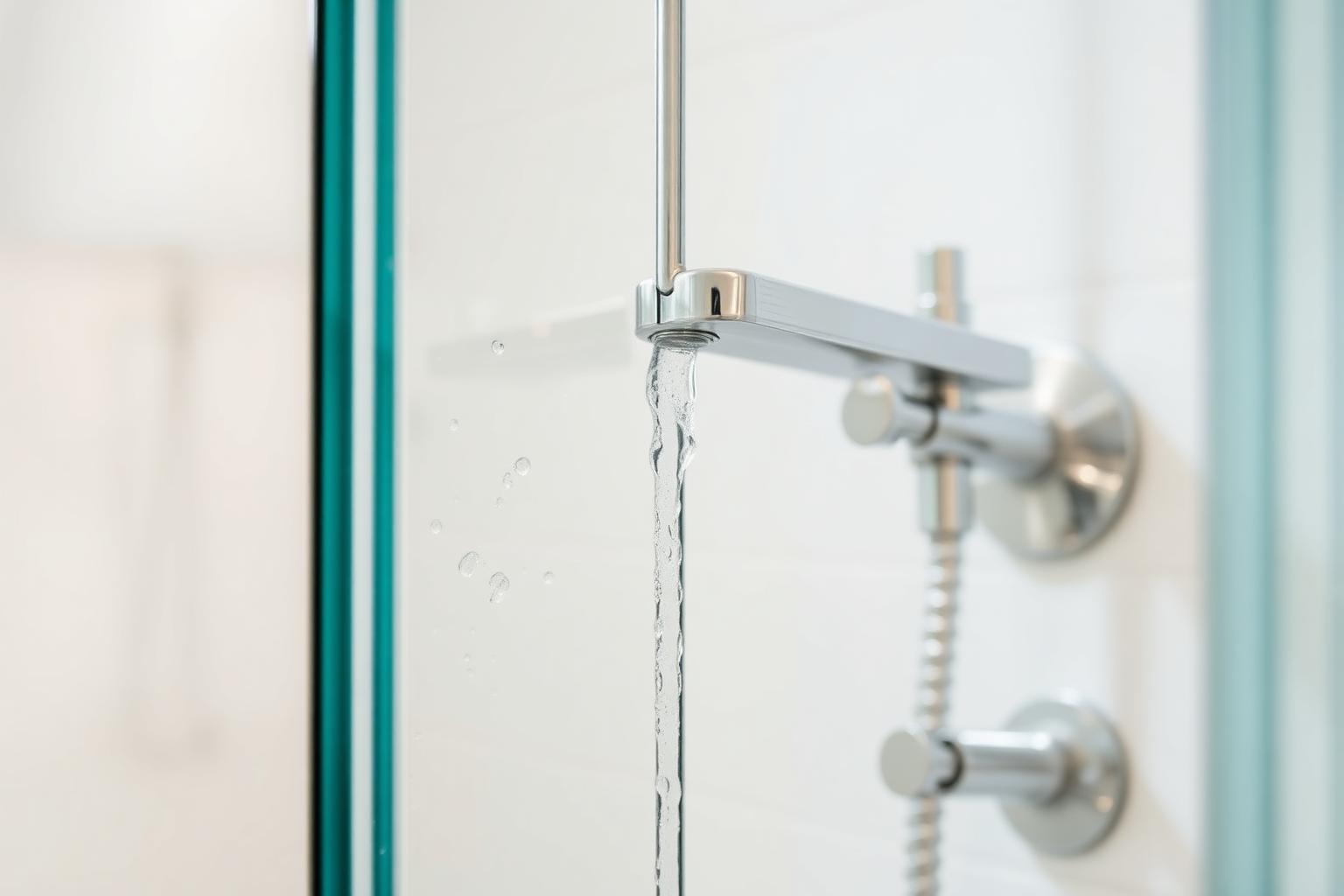
If your water has any meaningful mineral content — and somewhere between 80 and 90 percent of homes in the United States do — every surface that touches it eventually develops a chalky white film. On a glass shower door, the film looks like permanent fog. On a chrome faucet, it looks like cloudy spots. On a showerhead, it eventually clogs the nozzles and weakens the spray. None of it is dirt. All of it is dissolved calcium and magnesium left behind when water evaporates.
The good news is that mineral deposits dissolve in mild acid, and you almost certainly have a mild acid sitting in your pantry already. The method below uses white vinegar — sometimes with a little baking soda for assistance — and a lot of patience. It works on every common bathroom surface except natural stone.
What You'll Need
- A spray bottle of undiluted white vinegar
- A bottle of distilled white vinegar (for soaking)
- Several gallon-size plastic bags and rubber bands
- A microfiber cloth and a soft scrub sponge
- A small bowl of baking soda
- An old soft-bristled toothbrush
- About an hour of attentive time, spread across an afternoon
Critical safety note: never mix vinegar with bleach. The combination releases chlorine gas, which is genuinely dangerous to breathe. Vinegar plays well with baking soda and dish soap. Keep it away from anything containing chlorine.
Glass Shower Doors
Glass is the easiest surface to fix because mineral buildup sits right on top with no porous structure to dig into. Spray the entire door with undiluted white vinegar from your spray bottle. The vinegar will run down the glass, which is fine. Wait three minutes for the acid to start working.
Sprinkle a small handful of baking soda directly onto a damp non-scratch sponge and scrub the glass in slow circles. The mild abrasion of the baking soda combined with the dissolving action of the vinegar lifts even years of buildup. Work in vertical sections so the mixture does not dry on the glass.
Rinse with warm water from a bucket or the showerhead and dry immediately with a clean microfiber cloth. The first pass should remove 80 to 90 percent of the film. For stubborn spots, repeat. A long-neglected door may need three rounds, an hour apart.
Chrome and Stainless Faucets
For the faucet body and handles, soak a microfiber cloth in vinegar, wring out the excess, and drape it over the faucet for fifteen minutes. The cloth holds the vinegar against the metal long enough to dissolve the deposits without you having to stand there.
For the aerator (the small mesh screen at the tip of the spout, where water actually comes out), the trick is the plastic bag. Pour half a cup of vinegar into a small bag, position it so the aerator is fully submerged in the vinegar, and secure with a rubber band around the base of the spout. Leave for one hour. Remove, scrub gently with the toothbrush, rinse, and dry. The flow rate often improves noticeably afterward.
Showerheads
The showerhead is the part of the bathroom most dramatically improved by this method. Years of mineral buildup inside the nozzles weaken the spray and create that infuriating side-jet that hits the wall instead of your shoulder.
Fill a plastic bag with enough vinegar to fully submerge the showerhead. Tie the bag in place around the base with a rubber band. Leave overnight if possible, or for at least two hours during the day. Remove the bag (pour the vinegar down the drain — it is good for your pipes), and run the shower for thirty seconds to flush the dissolved minerals out. The change in water pressure can be startling.
If individual nozzles are still clogged, push the tip of a toothbrush or even a sewing pin into each one to clear any remaining deposits.
Toilet Bowl Rings
The ring at the waterline of a toilet bowl is usually mineral buildup, not dirt. Turn off the water at the valve behind the toilet and flush to lower the water level. Spray the ring generously with vinegar, sprinkle baking soda over it, and let it foam for ten minutes. Scrub with a stiff brush, flush, and turn the water back on.
For severe rings, drop a vinegar-soaked cloth directly on the ring overnight. By morning it will scrub away with almost no effort.
Hard water is patient. The cleaner has to be more patient.
What Not to Use
There is a category of products marketed specifically for hard water that are essentially industrial-strength acids. They work, and they also pit chrome, etch glass, damage rubber seals, and cause respiratory irritation. Vinegar does the same job. It just asks you to wait.
Avoid steel wool, razor blades, and abrasive powder cleansers on any visible surface. They scratch chrome and etch glass in ways you cannot undo. Stick to baking soda as your only abrasive — it is gentler than the surfaces you are cleaning.
Natural Stone Surfaces
If your bathroom has marble, travertine, slate, limestone, or any other natural stone, do not use vinegar on it. The acid will etch the surface permanently. For stone, use a pH-neutral stone cleaner from any hardware store and a soft cloth. Hard water deposits on stone are best prevented (with daily squeegeeing) rather than removed.
A Word on Filtered Water
If you live somewhere with truly aggressive hard water and the cleaning method below feels like a weekly chore, consider a shower-head filter. They cost between 20 and 60 dollars, screw on in under a minute, and dramatically reduce the amount of mineral content reaching your skin, hair, and bathroom surfaces. The water quality is also noticeably gentler. A water softener for the whole house is a larger investment but has the same effect for every faucet in the home.
The Prevention Habits
Once you have the bathroom looking new again, three small habits keep it that way. The first is a daily squeegee on the glass shower door — twenty seconds maximum. The second is a daily wipe of the faucet with a dry microfiber cloth after the last use. The third is a monthly vinegar-bag treatment of the showerhead, which keeps the nozzles permanently clear.
Together, those three habits prevent essentially all visible mineral buildup. The bathroom will continue to look maintained without ever needing another rescue operation.
What to Do Today
If you have ten free minutes, start the bag soak on the showerhead. If you have an hour, do the full glass door. If you have an afternoon, do everything. The order does not matter; the patience does. Set a timer, walk away, come back, finish. Your bathroom can look like it did the year you moved in.
Final Thoughts
Hard water is not personal. It is just chemistry. The same chemistry that creates the problem also solves it, with kitchen ingredients and a little time. Once you understand that the answer is almost never harder scrubbing, the work becomes easier and the results last longer. Patience is the most underrated cleaning tool in any home.
Filed in Cleaning · Bathroom Cleaning
More articles